Environment & Future
The conversation around environmental sustainability often feels overwhelming, dominated by statistics about melting ice caps and corporate emissions. Yet between global policy debates and industrial-scale solutions lies a powerful truth: individual actions, when understood and applied consistently, create measurable impact. The relationship between our daily choices and planetary health isn’t abstract—it’s direct, quantifiable, and far more within our control than many realize.
This comprehensive resource explores seven interconnected areas where informed personal decisions shape environmental outcomes: home energy efficiency, waste reduction, renewable energy adoption, digital consumption, wetland preservation, forest restoration, and ocean protection. Each domain presents specific challenges and opportunities, from understanding heat loss patterns in your walls to recognizing stress signals in marine wildlife. The goal isn’t perfection but progress—replacing confusion with clarity, replacing paralysis with practical steps, and building confidence through knowledge that transforms good intentions into lasting habits.
Why Individual Actions Matter for Environmental Change
The question “Can one person really make a difference?” deserves a nuanced answer. While individual carbon footprints represent a fraction of industrial emissions, collective behavior shifts create market demands that reshape entire industries. When thousands of households improve insulation, manufacturers respond. When consumers prioritize repairable products, planned obsolescence loses profitability. The aggregation of informed choices generates cultural momentum that often precedes—and frequently accelerates—regulatory change.
Consider this perspective: household energy consumption typically accounts for roughly one-fifth of national emissions in developed economies. Personal transportation adds another significant portion. Digital activities, while seemingly invisible, require massive data centers consuming electricity equivalent to small nations. These aren’t trivial margins—they’re leverage points where knowledge translates directly into reduced environmental load. The most effective individual actions share three characteristics:
- Repeatability: Daily or weekly habits compound far more than annual grand gestures
- Measurability: Changes that produce visible results (lower bills, less waste) reinforce commitment
- Scalability: Practices that spread naturally through communities multiply impact exponentially
Understanding this framework helps prioritize efforts and sustain motivation through the inevitable learning curve each new practice requires.
Making Your Home Energy-Efficient and Climate-Ready
Residential buildings lose heat—and waste cooling—through predictable pathways that most occupants never consider until energy bills spike. The science of thermal efficiency isn’t mysterious, but it requires systematic thinking about how buildings interact with weather. A drafty window might seem like a minor inconvenience until you realize it’s forcing your heating system to work continuously against a preventable leak.
Diagnosing Where Energy Escapes
Before implementing solutions, accurate diagnosis prevents wasted effort. Thermal imaging reveals temperature differentials across surfaces, but simpler methods work surprisingly well: feeling for air movement around window frames, observing condensation patterns, or noting which rooms struggle to maintain comfortable temperatures. Common culprits include attic hatches, recessed lighting fixtures, electrical outlets on exterior walls, and the gaps where different building materials meet. A systematic room-by-room assessment, ideally during temperature extremes, identifies priorities.
Practical Insulation and Weatherization
Addressing heat loss doesn’t necessarily require professional contractors. Weatherstripping doors and windows, insulating attic access points, applying window film, and sealing visible gaps with appropriate caulk or foam represent accessible starting points. The return on investment shows immediately in comfort and typically pays for materials within a single heating season. More substantial projects—like adding attic insulation or insulating basement rim joists—require more effort but target the areas responsible for disproportionate energy waste.
Optimizing Heating Behaviors and Equipment
Equipment efficiency depends heavily on user patterns. Radiators blocked by furniture or curtains waste energy heating obstructions rather than rooms. Thermostat programming that matches actual occupancy patterns prevents heating empty spaces. Humidity management matters too—excessive moisture forces heating systems to work harder and creates conditions for mold growth, while overly dry air feels colder than it actually is, prompting unnecessary temperature increases. Understanding these interactions transforms heating from a simple on/off decision into a nuanced practice that balances comfort, cost, and environmental impact.
Embracing the Circular Economy: From Waste to Resource
The linear model of “make, use, dispose” treats Earth as both an infinite source and infinite sink—assumptions that reality contradicts daily. The circular economy reimagines products as temporary arrangements of materials that will eventually flow elsewhere, either back into production cycles or into biological systems. This isn’t merely philosophical; it’s increasingly practical as material costs rise and disposal options shrink.
Understanding What Recycling Actually Achieves
Recycling faces real limitations that good intentions can’t overcome. Contamination renders entire batches unprocessable. Certain material combinations can’t be separated economically. Markets for recyclables fluctuate wildly based on commodity prices and international trade policies. “Wish-cycling”—throwing questionable items into recycling bins hoping they’ll somehow get processed—actually harms the system by introducing contaminants. Effective recycling requires understanding local facility capabilities, cleaning containers properly, and accepting that some items genuinely belong in trash despite the emotional discomfort that creates.
Prioritizing Reduction and Reuse
The hierarchy matters: reducing consumption entirely beats reusing, which beats recycling, which beats disposal. Daily habits that minimize waste generation in the first place—refusing unnecessary packaging, choosing concentrated products, buying in appropriate quantities to prevent food waste, selecting durable items over disposable alternatives—prevent waste more effectively than perfect sorting ever could. Reuse extends product life through creativity: glass jars become storage, clothing transforms into cleaning rags, furniture gets repaired rather than replaced.
Choosing Products Designed for Longevity
Product selection significantly influences eventual waste generation. Items designed for repair—with available replacement parts, accessible fasteners rather than glue, modular components—support circular use patterns. Manufacturers increasingly label products with repairability scores, and online communities share repair guides for everything from appliances to electronics. The calculation isn’t purely environmental: a moderately more expensive item that lasts three times longer and costs half as much to maintain represents both economic and ecological sense. Planning for a product’s eventual end-of-life when making purchase decisions—Can components be separated? Are materials valuable enough for reclamation?—closes the loop conceptually before waste even exists.
Harnessing Renewable Energy at Home
Solar technology has matured from experimental to economically mainstream in many regions, yet the decision process remains complex. The calculations involve upfront costs, projected savings, available incentives, roof characteristics, and financing structures that can either optimize or undermine the investment. Understanding these variables separates successful installations from disappointing ones.
Evaluating Your Solar Potential
Sun exposure determines everything else. Shading from trees or adjacent buildings during peak sun hours drastically reduces output. Roof orientation and pitch affect efficiency—equator-facing slopes at moderate angles perform best. Local weather patterns matter, though modern panels generate electricity even under clouds, just at reduced rates. Online tools provide preliminary assessments, but site-specific analysis accounts for microclimates and obstacles. Understanding net metering policies in your area—how utilities credit solar electricity you don’t immediately use—substantially affects financial projections.
Navigating Installation and Financial Decisions
The choice between purchasing, financing, or leasing carries long-term implications. Ownership captures full incentives and increases property value but requires capital or accepting loan terms. Leases reduce upfront costs but often include provisions that complicate property sales and capture most savings for the leasing company. Predatory contracts exist—terms that lock in above-market rates, transfer fees that surprise new homeowners, or production guarantees that underestimate realistic output. Comparing multiple proposals, understanding escalation clauses, and calculating actual return on investment over the system’s lifespan prevents costly regrets.
Considering Battery Storage
Battery technology allows storing solar production for use during evening hours or outages, increasing self-sufficiency. However, batteries add substantial cost, have limited lifespans requiring eventual replacement, and make financial sense primarily where electricity rates vary dramatically by time of day or where grid reliability concerns justify backup power. The environmental calculation includes manufacturing impacts and disposal considerations for lithium-based systems. For many households, grid-connected systems without storage still offer the best balance of cost, simplicity, and environmental benefit.
Reducing Your Digital Carbon Footprint
Digital activities feel weightless, yet they require physical infrastructure consuming tremendous energy. Every streamed video, cloud-stored photo, and video call involves data centers, network equipment, and devices—all drawing power and generating heat that requires even more power to dissipate. The hidden environmental cost of our connected lives deserves the same attention we give to more visible consumption.
Understanding Server-Side Impacts
Data centers worldwide consume several percent of global electricity, and that proportion grows as digital services expand. Streaming high-definition video requires significantly more data transmission and processing than audio or standard definition. Cloud storage keeps multiple copies of files across geographically distributed servers for redundancy. Email attachments stored indefinitely occupy server space requiring continuous power. While individual actions seem negligible, collective habits shape how much infrastructure companies build and maintain. Streaming lower resolutions when screen size doesn’t justify 4K, deleting old emails and unused cloud files, and downloading frequently accessed content rather than re-streaming it repeatedly—these choices aggregate into measurable demand reductions.
Optimizing Personal Device Use
The manufacturing environmental cost of electronics typically exceeds their lifetime energy consumption, making hardware longevity critical. Resisting upgrade cycles driven by marketing rather than need, maintaining devices properly to extend lifespan, and choosing repairable models reduces the most significant portion of personal technology’s environmental burden. Device settings matter too: reduced screen brightness, disabled unnecessary background processes, and appropriate power-saving modes decrease energy demand. Comparing cloud versus local storage reveals trade-offs—cloud storage requires continuous server operation, while local storage uses device power only during access, though with less redundancy and accessibility.
Protecting Natural Ecosystems: Wetlands and Forests
Natural systems provide services that engineered infrastructure cannot replicate cost-effectively—flood control, water filtration, carbon sequestration, biodiversity habitat. Wetlands and forests represent particularly valuable ecosystems currently threatened by development pressure and climate change. Understanding their functions informs both protection advocacy and personal property decisions.
Recognizing the Value of Wetlands
Marshes, swamps, and other wetlands act as natural sponges, absorbing flood waters that would otherwise inundate developed areas. They filter pollutants, recharge groundwater, and support disproportionately high biodiversity relative to their area. Property adjacent to wetlands often faces building restrictions that protect these functions—regulations that some view as limitations but which actually preserve the flood protection and water quality benefits that benefit entire watersheds. Drainage projects that convert wetlands to buildable land frequently create problems downstream and eliminate natural infrastructure that communities eventually pay to replace artificially. Choosing to preserve wetland areas, planting native vegetation that supports wetland hydrology, and avoiding drainage modifications recognizes the practical value these ecosystems provide.
Participating in Effective Reforestation
Tree-planting initiatives range from ecologically sound to counterproductive. Monoculture plantations—single species planted in rows—provide minimal biodiversity benefit and can even harm ecosystems by outcompeting native vegetation or altering water tables. Legitimate reforestation prioritizes native species diversity, appropriate site matching, and long-term maintenance commitments. “Phantom forests”—projects that plant trees in inappropriate locations, fail to ensure survival, or clear existing vegetation to plant trees—waste resources and mislead participants. Effective participation means researching organizations, volunteering with local groups that understand regional ecology, and recognizing that proper planting season, ongoing care, and realistic survival rate expectations matter more than sheer numbers planted. Carbon offset programs that fund reforestation vary enormously in actual impact—verification standards, additionality guarantees (ensuring forests wouldn’t have grown anyway), and permanence protections separate credible programs from greenwashing.
Practicing Responsible Ocean Tourism
Marine ecosystems face compounding pressures from warming, acidification, and direct human disturbance. Tourism can either support conservation through economic incentives for protection or accelerate decline through physical damage and behavioral disruption. The difference lies in informed, respectful practices that prioritize ecosystem health over entertainment maximization.
Recognizing and Avoiding Wildlife Stress
Animals exhibit stress signals that many tourists miss or ignore: sudden movement changes, altered breathing patterns, protective behaviors around young, or attempts to increase distance from observers. Marine mammals approaching boats may appear friendly but are often exhibiting habituation that makes them vulnerable to vessel strikes. Feeding wildlife—whether intentionally or through food waste—alters natural behaviors, creates dependencies, and can harm animals through inappropriate diets. Responsible wildlife encounters maintain appropriate distances, limit interaction duration, never involve touching or feeding, and prioritize animal behavior over photo opportunities.
Minimizing Direct Environmental Impacts
Conventional sunscreens contain chemicals that damage coral reefs even in minute concentrations—oxybenzone and octinoxate being primary culprits. Reef-safe alternatives use mineral-based UV protection that doesn’t leach harmful compounds. Diving and snorkeling practices affect delicate ecosystems: maintaining neutral buoyancy prevents accidental coral contact, secured equipment avoids dragging, and staying off the bottom protects both organisms and visibility for others. Choosing operators who demonstrate environmental commitment—through mooring buoys rather than anchors, limited group sizes, briefings about protective behaviors, and support for marine protected areas—ensures tourism dollars fund conservation rather than degradation. The comparison between captive animal encounters and ethical wild observations favors the latter not just ethically but experientially—animals exhibiting natural behaviors in appropriate habitats provide more authentic and educational experiences than performances or confined interactions.
These interconnected domains—home efficiency, circular consumption, renewable energy, digital impacts, ecosystem protection, and responsible recreation—form a comprehensive approach to environmental stewardship. Progress doesn’t require perfection across all areas simultaneously. Starting with whichever topic feels most accessible, learning systematically, and gradually expanding knowledge and practice into new domains creates sustainable momentum. The expertise develops through experience, mistakes become learning opportunities, and incremental improvements compound into substantial personal impact that, multiplied across communities, shapes the future we’re collectively building.

How to Spot and Avoid Unethical Marine Tourism Traps While Traveling
Contrary to popular belief, a tour operator’s “eco” label is often meaningless. The key to ethical marine tourism isn’t following a checklist, but learning to recognize the subtle, often invisible, signs of wildlife exploitation. A dolphin’s “smile” is an anatomical…
Read more
How to Verify if Your Reforestation Donation Actually Plants Trees?
The true verification of a reforestation project lies not in the number of trees planted, but in the ecological integrity and survival rates of the resulting forest. Planting a single species (monoculture) can create a sterile “green desert,” destroying local…
Read more
Why Living Near Wetlands Can Protect Your Home from Flooding?
Contrary to common fears, a nearby wetland is one of the most effective, low-cost flood protection systems a property can have. Wetlands are not a liability but a high-performance “natural infrastructure” that actively absorbs storm surges and lowers flood risk….
Read more
How to Reduce Your “Invisible” Digital Carbon Footprint?
The largest part of your digital carbon footprint isn’t from active use; it’s from the invisible energy consumed by data storage and device manufacturing. The carbon cost of manufacturing a new smartphone far outweighs the energy it uses in its…
Read more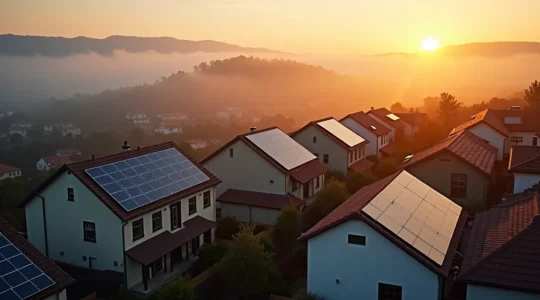
Is Solar Energy Worth the Investment for Your Roof Orientation?
The most profitable roof for solar panels isn’t necessarily the sunniest; it’s the one whose power generation curve creates the most value against your specific utility’s rate structure. East- and west-facing roofs can outperform south-facing ones when time-of-use electricity rates…
Read more
How to Build a Real Circular Economy in Your Home (Beyond the Recycling Bin)
The frustrating truth is that many of your best recycling efforts are likely being wasted due to a broken and misunderstood system. Upstream choices—like preferring screwed-together products over glued ones—have a far bigger impact than downstream sorting. Contamination (like bagged…
Read more
How to Stop Drafts and Improve Thermal Comfort in an Old House?
In summary: Identify and seal hidden air leaks caused by the “stack effect,” not just obvious window gaps. Use low-cost window films and strategic heating cycles based on your home’s thermal mass. Control humidity with “purge ventilation” to eliminate the…
Read more