Home & Lifestyle
Your home is far more than four walls and a roof. It’s the backdrop to your daily rituals, the stage for family moments, and a silent partner in your mental and physical health. Yet many people underestimate how profoundly their living environment shapes their mood, productivity, and overall quality of life. From the way natural light filters through a window to the hidden storage that keeps clutter at bay, every design decision carries weight.
The intersection of home and lifestyle has evolved considerably. Today’s living spaces must work harder than ever—adapting to remote work, accommodating multigenerational families, maximizing limited square footage, and supporting wellness goals. This article explores the foundational principles that transform houses into truly functional, health-supporting, and value-rich homes. Whether you’re preparing a property for sale, designing for mental clarity, or simply seeking to make the most of every inch, understanding these core concepts will empower you to make informed decisions that serve you for years to come.
Why Your Living Space Shapes Your Wellbeing
The connection between environment and mental health isn’t abstract—it’s biochemical. Research has established clear links between cluttered spaces and elevated cortisol levels, the stress hormone that affects everything from sleep quality to immune function. When your visual field is crowded with unfinished tasks and disorganized belongings, your brain remains in a low-level state of alert, unable to fully rest even during downtime.
The Psychology of Neutral and Minimalist Environments
Neutral color palettes and minimalist design aren’t just aesthetic choices—they’re cognitive tools. Spaces dominated by soft grays, warm whites, and natural wood tones create what psychologists call “visual rest.” Your brain processes fewer stimuli, freeing up mental bandwidth for focused work or genuine relaxation. Think of it like the difference between a quiet library and a bustling marketplace: both serve purposes, but one clearly supports concentration better than the other.
Balancing Warmth With Clean Lines
A common pitfall in minimalist design is creating spaces that feel sterile or unwelcoming—the dreaded “showroom” effect. The solution lies in layering textures and introducing organic elements. A room with clean architectural lines can still feel warm through strategic choices:
- Natural materials like linen curtains, wool throws, or jute rugs that add tactile interest
- Wooden furniture with visible grain patterns rather than high-gloss finishes
- Warm-toned metals (brass, copper) instead of exclusively cool chrome
- Live plants that introduce irregular, organic shapes to balance geometric furniture
The goal is visual calm without emotional coldness—a space that feels restful yet lived-in.
Strategic Design Choices That Maximize Property Value
Whether you’re planning to sell soon or simply want to protect your investment, certain design principles consistently deliver measurable returns. Home staging has revealed universal preferences among buyers, and understanding these can inform decisions even if you’re not actively marketing your property.
Depersonalization is perhaps the most counterintuitive yet powerful concept. Family photos, personalized artwork, and niche collections prevent potential buyers from envisioning themselves in the space. The same principle applies to bold paint colors or highly specific design themes. A master bedroom painted in vibrant purple may delight the current owner but creates a mental hurdle for viewers who must now imagine the effort required to neutralize it.
Light optimization deserves special attention. Properties shown during golden hour with all curtains open, supplemented by strategically placed lamps, consistently photograph better and feel more spacious. This isn’t about deception—it’s about revealing your home’s best qualities. Consider that natural light affects perceived room size by up to 15-20% in viewer assessments, according to real estate psychology studies.
Room prioritization follows predictable patterns. Buyers make unconscious judgments within the first eight seconds of entering a space, and they weigh rooms differently. In order of impact: entryway, kitchen, master bedroom, main bathroom, and living areas. Concentrating your staging efforts on these high-impact zones delivers better returns than trying to perfect every square foot equally.
Small Space Living: Making Every Square Foot Count
Urban living and rising housing costs have made space efficiency a necessity rather than a preference for many households. The challenge isn’t just fitting belongings into tight quarters—it’s maintaining quality of life and functionality in environments where every inch must earn its keep.
Multi-Functional Furniture Solutions
The micro-apartment revolution has driven remarkable innovation in convertible furniture. Modern Murphy beds, for instance, have evolved far beyond the clunky mechanisms of previous generations. When evaluating these pieces, mattress density matters—foam densities below 1.8 pounds per cubic foot will compress uncomfortably within a year, while quality mechanisms should withstand 5,000+ open-close cycles.
Opening mechanisms fall into three main categories: spring-loaded (lightweight, affordable but less stable), piston-assisted (smooth operation, mid-range price), and European-style gas shocks (premium, near-effortless operation). Testing before purchase is non-negotiable; the mechanism should require minimal effort and never feel unstable when partially extended.
Storage Innovation in Challenging Spaces
Awkward kitchen corners, irregular wall angles, and dead space under stairs represent opportunities rather than obstacles when approached systematically. Vertical integration—using the full height from floor to ceiling—can increase storage capacity by 40-60% compared to standard installations.
Bespoke solutions often provoke cost hesitation, but the calculation changes when you consider longevity. A custom corner cabinet system designed for your specific kitchen geometry will outlast and outperform three successive sets of freestanding furniture, especially when constructed from durable materials like marine-grade plywood or solid hardwood rather than particleboard. The key is avoiding measurement errors through professional templating before fabrication begins.
Flexible Homes That Evolve With Your Life
The most resilient home designs anticipate change rather than resist it. Families expand and contract, work patterns shift, aging parents may need accommodation, and hobbies evolve. Designing for flexibility from the outset prevents costly renovations later and supports genuine long-term livability.
Start by drafting flow diagrams that map how different family members move through your space during typical weekdays versus weekends. This reveals bottlenecks and underutilized areas. Perhaps that formal dining room could serve triple duty as a homework station, occasional guest room, and holiday gathering space if designed with flexible room functions in mind.
Common structural regrets include load-bearing walls that limit future reconfiguration, inadequate electrical planning (too few outlets in awkward locations), and plumbing runs that make bathroom additions prohibitively expensive. Before committing to major changes, consult with a structural engineer about which walls can be modified later and where utility infrastructure could be extended.
Phasing renovation work strategically allows you to spread costs while maintaining livability. Tackle projects in this order: structural and systems (foundation, roof, HVAC), then functional improvements (kitchen, bathrooms), followed by aesthetic updates (flooring, paint). This sequence ensures you never invest in finishes only to tear them out when addressing deferred structural needs.
Sound, Privacy and Sensory Comfort in Shared Spaces
Whether you’re living in a multi-unit building, managing a multigenerational household, or simply want to isolate your home office from family noise, acoustic management dramatically improves daily comfort. Sound issues often prove more disruptive to wellbeing than minor space constraints, yet they’re frequently overlooked until they become problems.
Understanding basic sound reverberation helps explain why some rooms feel louder than others. Hard surfaces (tile, hardwood, glass) reflect sound waves, amplifying noise, while soft materials absorb them. An empty room with hardwood floors and bare walls can measure 10-15 decibels louder than the same space furnished with rugs, curtains, and upholstered pieces.
Discrete sound absorbers have become increasingly sophisticated. Acoustic panels now come disguised as artwork, decorative wall tiles, or even planters. For shared living situations, strategic placement matters more than quantity: position absorbers on walls opposite main noise sources and at reflection points where sound bounces between parallel surfaces.
Furniture zoning creates psychological and acoustic separation without construction. A tall bookshelf positioned between living and dining areas provides visual privacy while its contents absorb sound. Dense, heavily upholstered pieces serve double duty as comfort items and noise barriers. Even preventing cooking smell spread—often overlooked in acoustic planning—improves the sensory comfort of connected spaces through proper range hood ventilation and strategic air circulation.
The Power of Indoor Plants for Health and Atmosphere
Indoor plants represent one of the most accessible interventions for improving both air quality and mental health, yet persistent myths and practical concerns prevent many people from fully leveraging their benefits.
First, let’s address common misconceptions. While NASA’s famous clean air study demonstrated that plants can remove certain volatile organic compounds, a single potted plant won’t transform your air quality. Meaningful air purification requires approximately one medium-to-large plant per 100 square feet. However, the mental health benefits—reduced stress markers, improved concentration, and enhanced mood—manifest with even modest greenery introduction.
Creating humidity microclimates benefits both plants and occupants, especially in climate-controlled homes where indoor humidity often drops bel

How to Finally Keep Your Indoor Plants Alive in a Low-Light Apartment
Contrary to popular belief, keeping plants alive isn’t about a rigid watering schedule or finding one ‘indestructible’ plant. Success comes from learning to read your plant’s specific signals and creating a responsive care system. This approach helps you prevent the…
Read more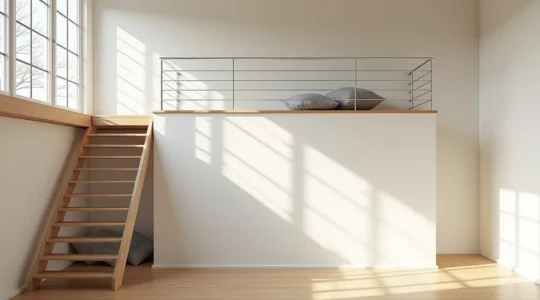
How to Build a Mezzanine in a Small Loft Without Breaking Building Codes?
Building a legal mezzanine is less about construction and more about understanding the physics of safety and space that underpin building codes. Structural integrity is non-negotiable; your loft’s existing walls are likely not designed to support a new floor without…
Read more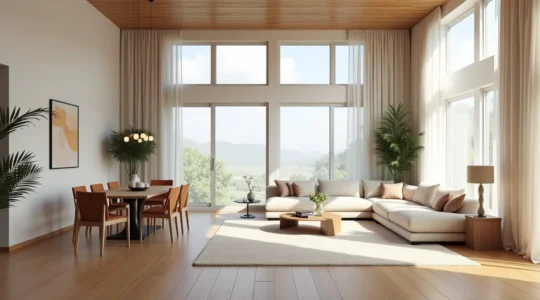
Solving the Sound Problem: How to Fix Noise and Echo in Your Modern Open Floor Plan
The key to fixing open-plan noise isn’t just adding soft furnishings; it’s a strategic, multi-layered approach that treats your home as an acoustic system. Identify specific acoustic issues like flutter echo and reverberation before applying solutions. Combine sound absorption (textiles)…
Read more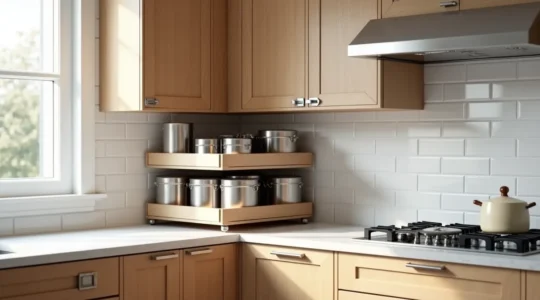
How to Design Custom Cabinetry for Awkward Kitchen Corners?
The true value of custom corner cabinets isn’t just filling a gap; it’s engineered precision that doubles functional storage and outlasts stock options by decades. Focus on mechanism quality (like Blum or Hettich) over simple aesthetics for long-term reliability. Choose…
Read more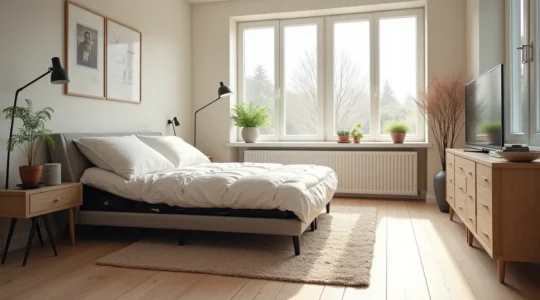
How to Choose a Convertible Sofa for Daily Sleep Without Back Pain?
The comfort of a daily-use sofa bed isn’t in its style, but in its hidden engineering specifications. Prioritize mattress foam density of at least 2.5 PCF (pounds per cubic foot) to prevent sagging and ensure spinal support. Analyze the opening…
Read more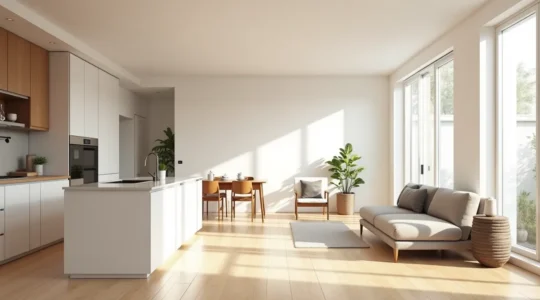
How to Plan a Floor Layout That Grows with Your Family for 10 Years?
The greatest myth in home design is the “perfect” floor plan; the reality is that a truly future-proof home is an adaptable system, not a static layout. Instead of a cavernous open plan, implement “Zoning Dynamics” using furniture and acoustic…
Read more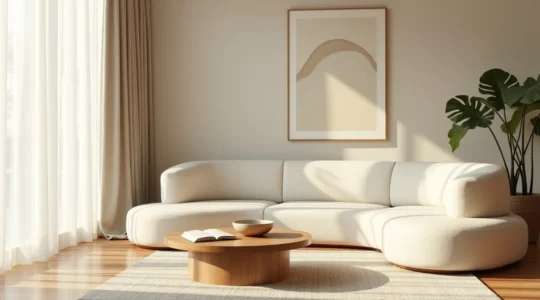
How to Design a Modern Minimalist Interior That Reduces Anxiety?
A truly calming home isn’t about having less, but about scientifically reducing your brain’s cognitive load. Visual clutter directly elevates cortisol, the body’s primary stress hormone, creating a state of chronic, low-level anxiety. Curved furniture and soft textures are neurologically…
Read more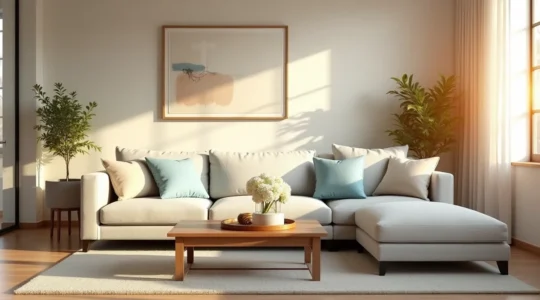
How to Increase Your Home’s Sale Price by $10,000 with a $500 Staging Budget?
Forget ‘making it pretty’. Staging for profit is a calculated psychological operation, not a design contest. Your personal items are not charming; they are financial liabilities that block a buyer’s imagination. Focus your tiny budget on the two rooms that…
Read more