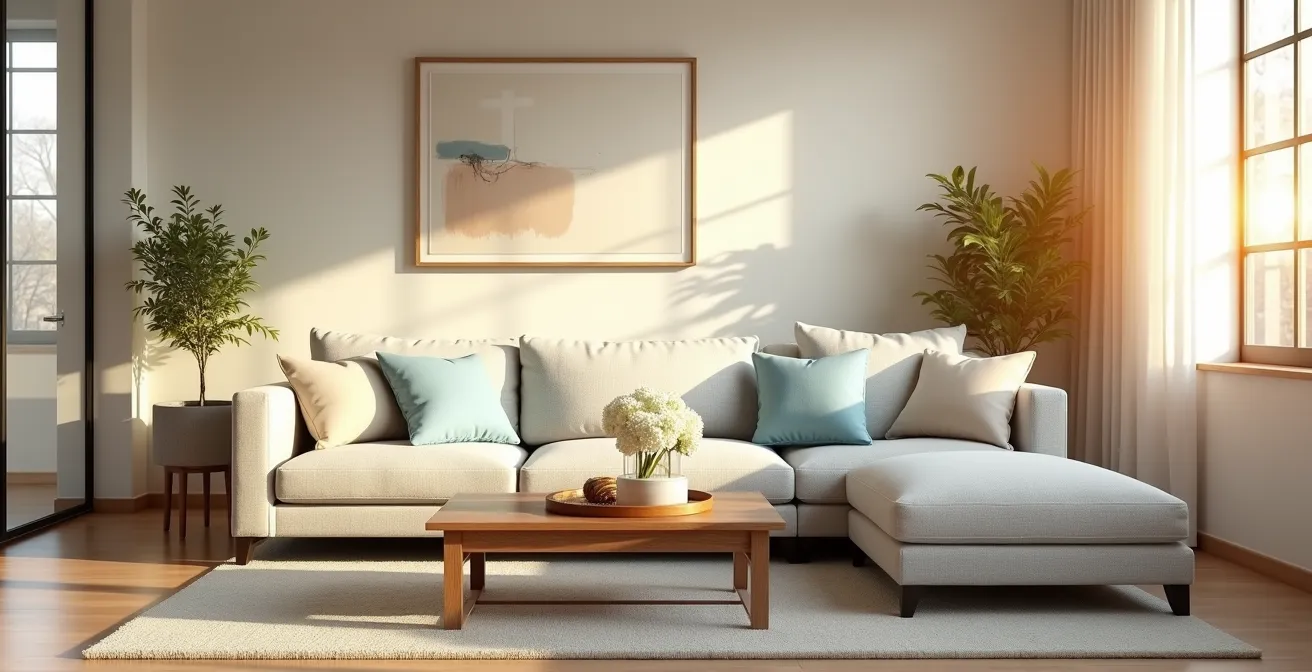
Forget ‘making it pretty’. Staging for profit is a calculated psychological operation, not a design contest.
- Your personal items are not charming; they are financial liabilities that block a buyer’s imagination.
- Focus your tiny budget on the two rooms that sell a house: the kitchen and the living room.
Recommendation: Execute a ruthless depersonalization of your space, then invest 70% of your budget in the kitchen to neutralize objections and the other 30% in the living room to create a powerful first impression.
You’re about to sell your most valuable asset, and every dollar counts. The conventional wisdom is to declutter, clean, and maybe slap on a coat of neutral paint. This is amateur advice. It’s the baseline, the cost of entry. It won’t get you top dollar. Leaving personal photos on the wall or ignoring a faint pet odor isn’t a minor oversight; it’s a financial blunder that can cost you tens of thousands. The average seller leaves money on the table because they think like a homeowner, not an investor.
The real key to unlocking an extra $10,000 from a meager $500 budget isn’t about decorating. It’s about manufacturing desire. This is a tactical operation. Every choice, from the fold of a duvet to the scent in the air, must be a calculated move to neutralize a buyer’s objections and trigger a specific emotional response: aspiration. You are selling a fantasy, a blank canvas where they can project their future. Your personal life has no place in that fantasy.
This guide is not about interior design. It is a profit-driven playbook. We will dissect the highest-ROI staging tactics, focusing on buyer psychology and ruthless efficiency. We will turn your $500 into a powerful tool that transforms your property from just another listing into the one they have to have, at a price that reflects its maximum perceived value.
To achieve this, we will systematically address the most critical staging elements that directly influence a buyer’s offer. This summary outlines the strategic battleground where you’ll deploy your budget for maximum financial impact.
Summary: A Flipper’s Guide to High-ROI Staging
- Why Personal Photos on Walls Drive Down Your Offer Price?
- How to Style a Bed Like a 5-Star Hotel for Open House Success?
- Kitchen vs Living Room: Where Should You Focus Your Staging Efforts?
- The Smell Mistake That Makes 80% of Buyers Walk Out Immediately
- When to Schedule Viewings: Leveraging Natural Light for Small Rooms
- How to Position Task Lighting to Eliminate Shadows on Your Workspace?
- Where to Hide the Mess: Designing “Drop Zones” That Are Invisible
- How to Plan a Floor Layout That Grows with Your Family for 10 Years?
Why Personal Photos on Walls Drive Down Your Offer Price?
Let’s be blunt: your family vacation photos are costing you money. The biggest mistake sellers make is failing to depersonalize. You see cherished memories; a potential buyer sees a stranger’s life they have to mentally scrub away. This creates a psychological barrier. Their brain is busy processing you and your family instead of imagining their own furniture against the walls. It breaks the spell. Your home stops being a potential future and remains firmly someone else’s past. This is not a theory; it’s a data-backed reality. In fact, research shows that 86% of home buyers can better visualize themselves in a staged home versus an unstaged one.
The goal is to create a “blank canvas” illusion. You need to remove every trace of your personal identity—photos, kids’ drawings, trophies, quirky collections, and monogrammed towels. Replace them with inexpensive, neutral art. Think abstract shapes, landscape prints, or even empty, elegant frames. These items suggest a sophisticated lifestyle without telling a personal story. The buyer isn’t distracted by your life; they’re inspired by the possibilities for theirs. This mental “move-in” is the first step toward an emotional connection, and emotional connection is what leads to strong, decisive offers.
How to Style a Bed Like a 5-Star Hotel for Open House Success?
The master bedroom is not just a room; it’s the buyer’s future sanctuary. It must whisper “rest, luxury, and escape.” A messy, uninspired bed screams “laundry day.” A perfectly styled bed, however, creates an aspirational fantasy that buyers will pay a premium for. You are not just making a bed; you are selling the feeling of waking up in a five-star hotel. This single element can elevate the perceived value of the entire room for less than $100 in new, crisp white linens.
Achieving this look is about a specific formula: layering. Forget your everyday floral comforter. You need to build volume and texture with a palette of whites, creams, and light grays. This creates a cloud-like effect that looks incredibly inviting in photos and in person. The key is to use a variety of textures—a smooth cotton sheet, a waffle-knit blanket, a fluffy duvet, and a few decorative pillows. The investment is minimal, but the psychological impact is enormous. You’re selling an experience, not just a mattress.

As you can see, the composition is built on layers of neutral tones and textures, creating depth and a sense of plush comfort. This isn’t just a bed; it’s a statement about the quality of life one could have in this home. Follow this 7-layer formula for a guaranteed high-end result: start with a quality mattress pad, add crisp white sheets, layer a lightweight blanket, place a folded duvet at the foot, and arrange a combination of sleeping pillows and decorative shams against the headboard, finishing with a single accent pillow.
Kitchen vs Living Room: Where Should You Focus Your Staging Efforts?
With a $500 budget, you can’t do everything. You must be a ruthless allocator of capital. The question isn’t “what looks nice?” but “what generates the highest return?” The data is clear: the battle for a buyer’s heart (and wallet) is won or lost in two key areas. The living room creates the critical first impression, but the kitchen is where the final decision is often made. It’s the functional and social heart of the home, and buyers scrutinize it more than any other space.
Therefore, your budget allocation must be strategic. The 80/20 rule of staging applies here: 80% of the perceived value comes from 20% of the space. Your focus should be disproportionately on the kitchen. A smart flipper’s strategy is to allocate roughly 70% of the budget ($350) to the kitchen and 30% ($150) to the living room. In the kitchen, this money goes toward high-impact, low-cost upgrades: painting dated cabinets, replacing old hardware with modern pulls, and installing a new faucet. In the living room, the money goes to accessories: new throw pillows, a stylish blanket, and a large piece of neutral art to create a welcoming, modern feel.
This data-driven approach ensures every dollar is working as hard as possible. You are directly addressing the rooms that buyers care about most, as confirmed by real estate professionals. The following table, based on industry data, breaks down this hierarchy of importance.
| Room | Buyer Importance | Average Cost to Stage | Impact on Sale Price |
|---|---|---|---|
| Living Room | 46% rate as most important | $200-400 | High – First impression room |
| Kitchen | 35% rate as most important | $300-500 | Very High – Sells houses |
| Master Bedroom | 43% rate as important | $150-250 | Medium – Emotional connection |
As a recent NAR profile on home staging confirms, while the living room and master bedroom are rated as important, the kitchen is where a relatively small investment can have an outsized impact on the final sale price and speed. It’s the ultimate ROI-driven decision.
The Smell Mistake That Makes 80% of Buyers Walk Out Immediately
You can have the most beautifully staged home in the world, but if it smells wrong, you’ve already lost. Scent is the most primal of senses, and it’s directly wired to the brain’s emotion and memory centers. A bad smell—from pets, cooking, smoke, or mildew—is not a minor issue. It’s a deal-killing objection that signals to a buyer that the house is dirty or has hidden problems. They won’t just lower their offer; they’ll walk out the door. Conversely, the right scent creates an immediate, subconscious feeling of “home.”
The biggest mistake is trying to cover up odors with strong, artificial fragrances like plug-in air fresheners or heavy floral sprays. This is just as bad as the original odor. It screams “I’m hiding something” and can trigger allergies or simple dislike. The goal is not to add a strong scent, but to achieve a state of absolute neutrality, followed by a subtle, clean, single-note fragrance. Think fresh linen, light citrus, or vanilla. It should be barely perceptible—a background note that says “clean and well-maintained.” As staging expert Debra Gould notes, the best staging is invisible.
Good staging doesn’t look like the place is staged. It just looks like a warm, inviting home.
– Debra Gould, The Staging Diva Training Program
Achieving this level of clean requires a systematic approach. You must first eliminate the source of any odors, not just mask them. This is a non-negotiable step that costs almost nothing but your time and effort.

Your Action Plan: The 3-Step Odor Elimination Protocol
- Deep clean first: Sprinkle baking soda on all soft surfaces, leave overnight, then vacuum thoroughly. This absorbs trapped odors from carpets and upholstery.
- Eliminate source odors: Steam clean carpets if necessary, wash walls with a mild soap solution, and soak faucet heads and drains in vinegar to remove mineral and organic buildup.
- Add subtle scent last: Use a single-note essential oil diffuser with vanilla or lavender on a low setting, or simmer a pot of water with citrus peels and a cinnamon stick an hour before a showing. Never use artificial plug-ins.
When to Schedule Viewings: Leveraging Natural Light for Small Rooms
Natural light is the most valuable free asset in home staging. It makes spaces feel larger, cleaner, and more cheerful. Dark, shadowy rooms, on the other hand, feel cramped, depressing, and small. You must schedule your showings to coincide with the time of day when your home is flooded with the most flattering light. This is not a passive act; it’s an active strategy to showcase your property at its absolute peak. Showing a north-facing living room on a gloomy morning is financial suicide.
Before your home is even listed, you need to become a sun-mapper. Spend a day tracking how the light moves through your house. Which rooms glow in the morning? Which ones get that beautiful, warm “golden hour” light before sunset? This information is your strategic weapon. For small or awkwardly shaped rooms, maximizing light is everything. Open all blinds and curtains, wash all windows until they sparkle, and add mirrors opposite windows to bounce light around the room. The goal is to create an environment that feels bright, airy, and expansive, directly increasing its perceived square footage and value.
Your real estate agent should be your partner in this strategy. Insist that showings are clustered during the optimal light windows you’ve identified. It might seem demanding, but it’s a critical detail that separates amateur sellers from pro flippers who extract every last dollar of value from their property.
Your Action Plan: The Golden Hour Viewing Strategy
- Map your home’s sun exposure: Spend a full day noting which rooms get the best direct and indirect light at specific times (e.g., “Kitchen: 9-11 AM,” “Living Room: 3-5 PM”).
- Schedule south-facing room viewings between 11 AM and 2 PM to capture maximum brightness and warmth.
- Plan showings for west-facing rooms in the two hours before sunset to bathe them in a warm, inviting, golden light that buyers find emotionally appealing.
- For darker, north-facing rooms, use midday slots (12-2 PM) when the indirect light is at its strongest and brightest.
- Create a backup lighting plan: For unavoidable evening showings or dark areas, ensure every fixture has a 100-watt equivalent (around 1500 lumens) warm white (2700K) LED bulb.
How to Position Task Lighting to Eliminate Shadows on Your Workspace?
In today’s market, a dedicated home office is no longer a bonus; for many buyers, it’s a requirement. Staging a functional, well-lit workspace can directly translate to a higher offer, especially from the growing demographic of remote workers. However, simply putting a desk in a corner is not enough. You must demonstrate that it’s a productive and pleasant environment. The number one killer of a good workspace is poor lighting, specifically shadows cast on the work surface.
Effective workspace lighting is about creating layers. You need ambient light (the general overhead room light), accent light (to add depth), and, most importantly, shadow-free task lighting. A single overhead fixture often creates shadows exactly where you don’t want them—cast by your own head and shoulders. The solution is an adjustable desk lamp, positioned correctly. The key is to place the lamp on the side opposite your dominant hand. If you’re right-handed, the lamp goes on the left. This ensures light comes in from the side, eliminating any shadows created as you write or use a mouse.
This small detail makes a huge difference in how the space is perceived. It transforms a makeshift corner into a professional-grade office. Staging this properly is a powerful signal to buyers that the home is ready for modern life. And this signal has a quantifiable financial impact. A recent NAR report highlighted that in 2023, 39% of sellers’ agents reported staging a home office, with these properties selling for significantly more to the remote workforce demographic.
Your Action Plan: The 3-Layer Workspace Lighting Setup
- Ambient Layer: Ensure the room’s overhead lighting is bright enough, aiming for roughly 100 watts of equivalent light per 50 square feet of workspace.
- Task Layer: Position an adjustable desk lamp at a 45-degree angle to the surface, on the side opposite your dominant hand, to completely eliminate working shadows.
- Accent Layer: Add a small, inexpensive LED strip behind the monitor or a small lamp on a nearby shelf to create depth and reduce eye strain, making the space feel more sophisticated.
- Bulb Consistency: Use warm white (2700K-3000K) bulbs across all three layers for a cohesive and inviting glow, avoiding the harsh, sterile look of cool white light.
- Final Test: Sit at the desk and pretend to work. Write, type, and move around to identify and eliminate any remaining shadow spots before a showing.
Where to Hide the Mess: Designing “Drop Zones” That Are Invisible
Let’s be realistic: even in a staged home, life happens. Keys, mail, bags, and shoes will accumulate. A pile of clutter by the front door is an instant negative first impression. The solution is not to pretend this reality doesn’t exist, but to control it. You need to design intentional “drop zones”—designated spots for daily clutter that look like thoughtful design elements, not last-minute hiding places. This is a pro-level move that neutralizes a major objection before it even forms.
The key is to make these zones both beautiful and functional. For an entryway, forget a messy pile on the floor. Instead, place a slim console table. On it, add a stylish ceramic bowl or a small decorative tray. This is now the designated spot for keys and mail. It looks intentional, chic, and organized. Underneath the table, place a large, attractive woven basket. This becomes the home for shoes or a backpack. The mess is contained, out of sight, and part of a pleasing visual composition.
This same principle applies to other problem areas. In a mudroom, use a bench with built-in cubbies and matching baskets. In the kitchen, a “command center” can be created with a wall-mounted mail sorter and key hooks. By providing a logical and attractive home for clutter, you’re not just hiding mess; you’re demonstrating to buyers that the house is easy to live in and keep organized. You’re selling them a vision of a serene, uncluttered life, which is a fantasy worth paying for.
Key Takeaways
- Depersonalize ruthlessly: Your personal items are financial liabilities that prevent buyers from mentally moving in. Create a blank canvas.
- Execute a 70/30 budget split: Focus 70% of your limited funds on high-ROI kitchen updates (hardware, paint) and 30% on living room accessories for first impressions.
- Master sensory staging: A bad smell is a deal-killer. Your goal is absolute cleanliness, followed by a single, subtle scent like vanilla or citrus.
How to Plan a Floor Layout That Grows with Your Family for 10 Years?
You’re not planning a life here; you’re selling a dream. Your job as a seller is to answer the buyer’s silent questions before they even ask. One of the biggest questions for family buyers is: “Can we grow here?” Staging a floor plan to suggest versatility and future potential is a master-level move that adds thousands to your home’s perceived value. You are showing them that your house is not just a short-term solution, but a long-term investment for their family.
This doesn’t mean cramming more furniture into the space. It means the opposite. Use a minimalist approach to define distinct functional zones within an open area. For example, in a large living room, use a rug to define the main seating area. In a corner by a window, place a single comfortable armchair, a small side table, and a floor lamp to create a “reading nook.” In an unused alcove or a wide hallway, stage a small desk and chair to suggest a “home office zone.” Each zone demonstrates a different way the space can be used without making it feel cluttered.
This strategy allows a buyer to see the home’s potential. The reading nook could become a play area for a toddler. The office zone is perfect for a teenager’s homework spot. You are physically planting seeds of imagination. By showcasing a flexible layout, you’re appealing to the widest possible range of buyers and assuring them that the home can adapt to their changing needs over the next decade. This eliminates the fear of outgrowing the space and makes them more confident in placing a high offer.
Now that you have the ruthless, profit-driven tactics, the next step is implementation. Don’t hesitate. Start today by decluttering and creating your strategic plan to transform your property into a high-demand asset.