In summary:
- Shift from being a planner to a logistics system architect to anticipate problems before they happen.
- Replace unreliable headcounts with binding digital RSVPs that collect crucial data and financial commitment.
- Implement a multi-layered communication protocol using a “Single Source of Truth” document to eliminate confusion.
- Systematically plan for luggage and buffer time using formulas and clear policies, not guesswork.
- Choose the right transport mode by analyzing the total cost of hassle, not just the base price.
Coordinating travel for more than twenty people can feel like herding cats through a hurricane. You’re managing shifting numbers, endless questions about pickup times, and the looming fear that someone—or their luggage—will be left behind. The typical advice is to get a headcount, create an itinerary, and communicate clearly. But as any event planner or maid of honor knows, a simple plan rarely survives contact with the glorious, unpredictable chaos of a large group. Headcounts change, emails get lost, and suddenly you’re facing a logistical nightmare hours before departure.
The core problem isn’t the plan itself, but the lack of a robust system to support it. What if the key to a stress-free experience wasn’t just better planning, but engineering a fail-proof process? The secret lies in shifting your mindset from a simple coordinator to a logistics system architect. This means creating processes that anticipate human error, manage expectations, and build in redundancies so that friction points become minor bumps instead of catastrophic failures. It’s about designing a system so solid that the execution feels almost effortless.
This guide will walk you through building that system. We won’t just tell you *what* to do; we will show you *how* to construct the specific frameworks for managing RSVPs, communication, vehicle selection, and timing. By the end, you’ll have a blueprint for executing group transport with the calm precision of a seasoned logistics professional, ensuring everyone arrives on time, together, and with all their belongings.
Summary: A System for Flawless Group Transport Logistics
- Why Headcounts Fail and How to Use Digital RSVPs?
- How to Communicate Pickup Locations So No One Gets Left Behind?
- Bus vs Car Convoy: Which Is More Cost-Effective for 15 People?
- The Luggage Mistake: Underestimating Space for 20 Suitcases
- When to Depart: Adding Buffer Time for Bathroom Stops and Traffic
- When to Book: The Sweet Spot for Weekend Availability
- How to Shower Without a Shower: The Wet Wipe Protocol?
- Plane vs High-Speed Rail: Which Is More Productive for a 4-Hour Trip?
Why Headcounts Fail and How to Use Digital RSVPs?
The most common starting point for group transport planning is also its most frequent point of failure: the simple headcount. A verbal “yes” or a casual “I’m in” is not a commitment; it’s an intention. People forget, plans change, and “maybes” linger until the last minute, making it impossible to book the right size vehicle or get an accurate cost per person. The solution is to stop chasing vague responses and start requiring a binding commitment through a structured digital RSVP system.
A proper digital RSVP is not just a form; it’s the foundation of your entire logistics system. By using platforms like Google Forms, Eventbrite, or specialized RSVP services, you can design a process that filters out ambiguity. The key is to make the commitment tangible. This often means requiring a small, non-refundable deposit or full payment upfront. This single step transforms a casual headcount into a confirmed passenger list, giving you the certainty needed to move forward with bookings.
Furthermore, your RSVP form is a critical data collection tool. Beyond a simple “Yes/No,” it should ask for essential logistical information. This includes full legal names (for ticketed travel), contact information, departure city, and even an acknowledgment that they have read a preliminary trip document. As companies using centralized platforms have found, this approach reduces booking chaos and improves efficiency. It establishes a formal, data-driven relationship with each traveler from the very beginning, turning a logistical variable into a known quantity.
Ultimately, a well-designed RSVP process eliminates the endless follow-ups and guesswork. It provides a clear, definitive list of who is coming, armed with the data you need to plan effectively, and backed by a financial commitment that ensures they show up.
How to Communicate Pickup Locations So No One Gets Left Behind?
Once you know who is coming, the next friction point is ensuring everyone knows exactly where to be and when. A single email or text message is not enough. Information gets buried in inboxes, lost in group chats, or simply forgotten. The key to flawless pickup coordination is a multi-layered communication protocol built around a “Single Source of Truth” (SSoT). This is a dedicated, easily accessible document or webpage that contains all final, confirmed trip details.
The SSoT could be a Google Doc, a private webpage, or a section in a trip management app. The medium is less important than the principle: all communication should point back to this single source. When a detail changes, you update it in one place only. This prevents conflicting versions of the itinerary from circulating and causing confusion. Your initial communications should establish the SSoT as the definitive guide for the trip.
To ensure this information is seen and acted upon, you need to layer your communication. Automated calendar invites with embedded location links and reminders are a powerful second layer. For day-of coordination, a dedicated messaging group (like WhatsApp or a private Slack channel) is essential for real-time updates and pinning the exact location. Appointing a designated on-site point person to check people in and call stragglers adds a crucial human element to your system. This combination of a permanent reference, automated reminders, and real-time channels ensures no one is left behind.

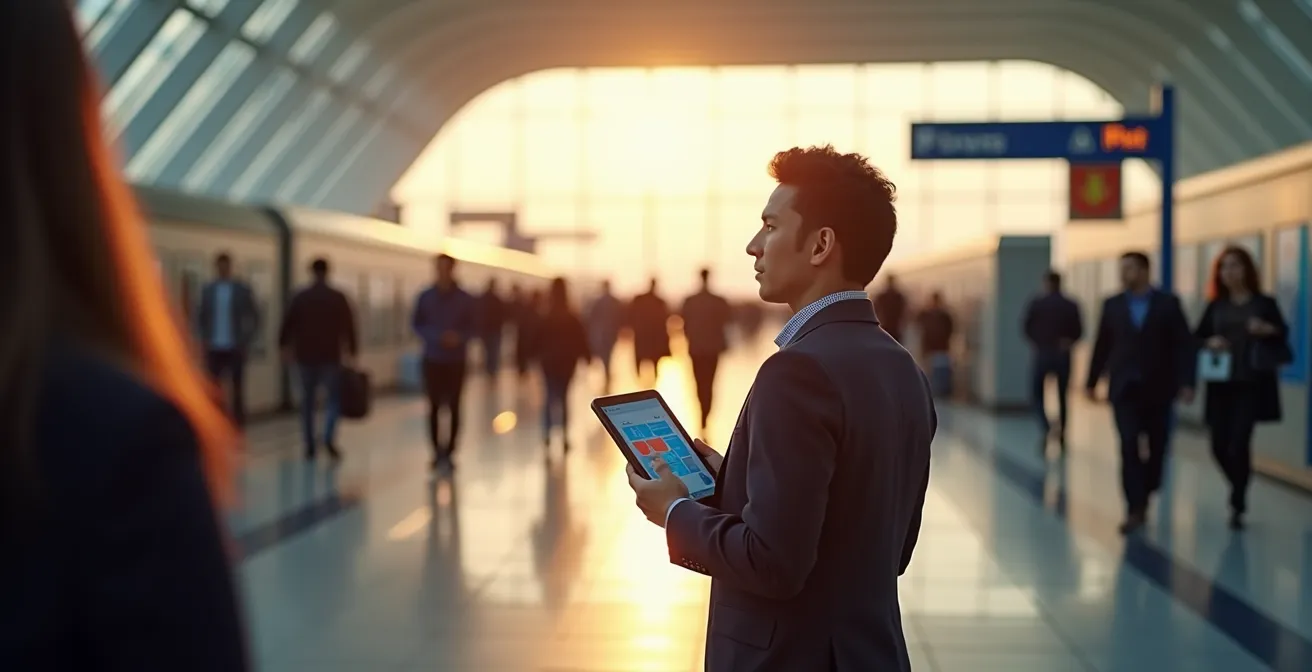
As the visual above suggests, organized communication leads to an organized gathering. Providing visual aids like photos of the landmark or a street-view screenshot of the exact meeting spot within your SSoT can eliminate any final ambiguity. This systematic approach transforms communication from a source of anxiety into a well-oiled machine.
Your Action Plan: 3-Layer Communication Protocol
- Single Source of Truth: Create a permanent, shareable document (e.g., Google Doc) with all final trip details, including addresses, times, and contact numbers. This is your master file.
- Automated Reminders: Set up and send calendar invites with embedded location links and configure automated email or text reminders for 24 hours and 2 hours before departure.
- Day-Of Real-Time Channel: Establish a dedicated messaging group (e.g., WhatsApp) for immediate updates. Pin the exact pickup location and use it to confirm everyone is on board.
- Visual Confirmation: Add photos of landmarks and street-view screenshots of the exact meeting spot to your “Single Source of Truth” to leave no room for interpretation.
- Human Redundancy: Designate an on-site point person responsible for a final check-in and physically calling anyone who is late or missing.
By engineering your communication this way, you move from hoping everyone got the message to ensuring they did. It’s about creating a safety net of information that makes it almost impossible for someone to miss the memo.
Bus vs Car Convoy: Which Is More Cost-Effective for 15 People?
For a group of 15 to 20 people, the question of “how” to travel often comes down to two choices: renting a single charter bus or organizing a multi-car convoy. On the surface, a car convoy can seem cheaper. If four drivers use their own vehicles, the upfront cost appears lower. However, a true cost analysis must account for hidden expenses and the “cost of hassle,” which is where the value of a charter bus becomes clear.
A car convoy’s costs quickly add up beyond just fuel. You have to factor in potential tolls, parking fees at the destination (which can be exorbitant for multiple vehicles), and the wear and tear on personal cars. More importantly, there is a significant coordination cost. You’re relying on multiple amateur drivers to navigate, stay together, and arrive on time, a recipe for fragmentation and stress. A professional driver in a charter bus eliminates driver fatigue and the risk of someone getting lost, ensuring the group stays 100% together.
While the initial quote for a charter bus may seem higher, it often represents the total cost with no surprises. It consolidates all transportation expenses into a single, predictable figure. Furthermore, the shared experience and cohesion of traveling together in one vehicle is a significant, if unquantifiable, benefit for events like weddings or corporate retreats. Choosing a bus can be a smart financial decision in the long run, as studies show that consistent bus transportation can save travelers an average of $1,412 per year compared to driving, highlighting its overall economic efficiency.
The following table breaks down the financial and logistical trade-offs for a hypothetical 200-mile trip.
| Factor | Charter Bus (20-seater) | Car Convoy (4 cars) |
|---|---|---|
| Base Cost (200 miles) | $1,200-1,500 total | $800-1,000 total |
| Per Person Cost | $80-100 | $53-67 |
| Hidden Costs | None | Parking, tolls, coordination time |
| Group Cohesion | 100% together | Fragmented experience |
| Driver Fatigue Risk | Professional driver | Multiple amateur drivers |
| Total Cost of Hassle | Lower | Higher |
When you account for the hidden costs and logistical risks, a charter bus often emerges as the superior choice not just for convenience, but for overall cost-effectiveness and peace of mind.
The Luggage Mistake: Underestimating Space for 20 Suitcases
One of the most frequent and disruptive logistical mistakes is underestimating luggage space. Twenty people can easily mean twenty large suitcases, plus an assortment of personal bags, backpacks, and carry-ons. Assuming it will all “just fit” into a van or the undercarriage of a bus is a high-risk gamble. A single passenger with an unexpectedly massive bag can compromise the entire plan. The solution is to stop guessing and implement a proactive Luggage Unit (LU) system.
This system treats luggage capacity as a fixed resource to be managed, just like seats on the vehicle. You create a simple unit of measurement and communicate it to the group from the outset. For example:
- Backpack or personal item = 0.5 LU
- Standard carry-on suitcase = 1 LU
- Large checked bag = 2 LUs
In your digital RSVP form, you must include a mandatory question asking each passenger to declare their total LUs. By summing these numbers, you get a precise total volume that can be matched against the vehicle’s specified cargo capacity. This transforms an unknown variable into a clear metric, allowing you to book the right vehicle or address space issues weeks in advance, not at the pickup curb.
This approach also allows you to set clear, enforceable policies. A common and effective strategy is the “Two-Bag Policy”: one main bag for cargo storage and one smaller personal item to be kept with the passenger. This policy should be communicated early and often, along with a clear statement of consequences for non-compliance, such as excess luggage having to be shipped separately at the owner’s expense. It may seem strict, but it is far less stressful than realizing twenty suitcases won’t fit into a space designed for fifteen.
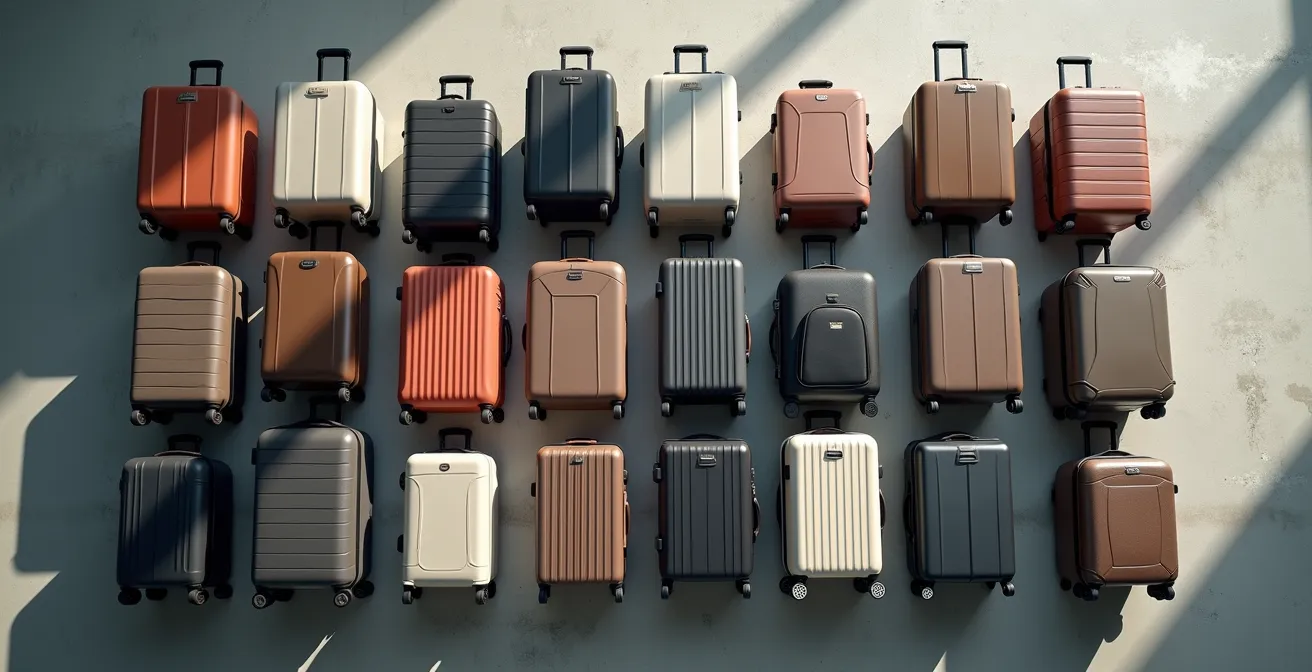
Visualizing the finite space, as shown above, reinforces why a systematic approach is necessary. By managing luggage with a clear system and firm policies, you eliminate one of the biggest potential sources of day-of-departure chaos and ensure a smooth start to the journey.
This proactive management of luggage space is a hallmark of a true logistics system architect, turning a potential crisis into a simple calculation.
When to Depart: Adding Buffer Time for Bathroom Stops and Traffic
Setting a departure time seems simple, but a schedule without a buffer is a schedule destined to fail. Traffic, unexpected construction, longer-than-planned bathroom stops, and even the simple process of boarding a large group can quickly derail an optimistic timeline. Instead of hoping for the best, you must engineer a resilient schedule by systematically adding buffer time. A reliable method for this is the Rule of 1.5.
The rule is straightforward: for every hour of planned driving time, add 15 minutes of buffer. For a 4-hour trip, you would add an extra hour. On top of this, add a fixed 30-minute buffer specifically for the initial boarding process. This accounts for the time it takes to check everyone in, load luggage, and get seated. This formula provides a realistic travel time estimate that can absorb common delays without causing stress or making you late.
Traffic is the most significant variable, and its unpredictability is precisely why a buffer is non-negotiable. With the average American spends 50.8 minutes on their daily commute, it’s clear that even short distances can be subject to significant delays. Your buffer is an insurance policy against this reality. To make the departure itself run smoothly, a strict departure sequence timeline should be communicated to all participants.
A Sample Departure Sequence:
- T-30 minutes: Final “get ready” reminder sent to the group.
- T-15 minutes: All passengers must be present at the pickup point.
- T-10 minutes: Boarding process begins with a final attendance check.
- T-0: Doors close. A final headcount is completed by the on-site point person.
- T+5 minutes: The vehicle departs, with or without any remaining stragglers.
This sequence, shared in the “Single Source of Truth” document, sets clear expectations and reinforces the importance of punctuality. It shifts the responsibility from you chasing people down to them meeting a clear, pre-agreed schedule.
This systematic approach to timing protects your itinerary and ensures that the group’s schedule is resilient enough to handle the inevitable small delays of group travel.
When to Book: The Sweet Spot for Weekend Availability
For group transport, especially for popular weekend dates or during high season, availability is a bigger challenge than price. Waiting too long can leave you with limited, undesirable, or vastly overpriced options. Securing your transportation requires a strategic booking timeline that is aligned with your event type. The “sweet spot” is about booking early enough to guarantee a vehicle, often even before you have a final, confirmed headcount.
Many transport companies allow you to place a refundable deposit to hold a vehicle. This is a critical tool for any logistics architect. It allows you to secure capacity well in advance while giving you the flexibility to finalize numbers. For high-stakes events like weddings, this means booking as early as 9 to 12 months out. For corporate events, a 6 to 9-month window is safer, while more casual outings can be secured 3 to 6 months ahead.
This proactive approach is essential because you are competing not just with other groups, but with a finite supply of vehicles and professional drivers. This is especially true for air travel, where airlines typically offer group rates for bookings of 10 or more passengers, but require significant lead time to arrange. Delaying the booking process until every RSVP is confirmed is a recipe for disaster. It’s far better to reserve a slightly larger vehicle early on than to be left scrambling for multiple smaller, more expensive options at the last minute.
General Booking Timeline by Event Type:
- Weddings / High Season Events: Book 9-12 months in advance.
- Corporate Functions / Conferences: Reserve 6-9 months ahead.
- Casual Group Outings: Secure transport 3-6 months before travel.
Considering off-peak departure times, such as a Friday evening or an early Sunday morning, can also open up more availability and potentially better rates. The key is to treat transportation as a foundational element of your event to be secured early, not an afterthought to be arranged once all other details are in place.
By booking strategically and early, you ensure that transportation is a solved problem, not a last-minute crisis.
How to Shower Without a Shower: The Wet Wipe Protocol?
A true logistics system architect plans for the worst-case scenario. For group travel, that can mean an unexpected overnight delay, a vehicle breakdown in the middle of nowhere, or a 12-hour journey with no access to proper facilities. In these moments, personal hygiene can have a surprisingly large impact on group morale. Being prepared with a “Wet Wipe Protocol” or a tiered emergency hygiene system shows a level of detailed planning that elevates you from a coordinator to a caretaker.
The goal is not to replicate a full shower, but to provide the means for everyone to feel refreshed and human again during a stressful situation. This system should be organized into tiers, from items individuals should carry themselves to a communal bag you, the organizer, keep on hand.
A well-structured emergency hygiene system acknowledges that small comforts can make a huge difference. The communal bag should be seen as the ultimate backup, ready for a true travel emergency. It’s a small investment of space and money that pays massive dividends in goodwill and comfort if it’s ever needed. Including morale-boosting items like mints, gum, or small snacks alongside the hygiene products further reinforces your role as a thoughtful and thorough planner.
The Tiered Emergency Hygiene System:
- Tier 1 (Personal Pocket): Items each person should always have easy access to, like hand sanitizer and lip balm.
- Tier 2 (Personal Backpack): A small personal kit with face wipes, deodorant, and a travel toothbrush/paste for a quick refresh.
- Tier 3 (Communal Emergency Bag): A bag you manage, containing full-body wet wipes, dry shampoo, a basic first-aid kit, and extra essentials like sunscreen or insect repellent.
This protocol isn’t about a single trip; it’s about being prepared for any situation. It is the kind of detail that turns a potential travel nightmare into a manageable inconvenience and an anecdote about “that time we were so glad our planner thought of everything.”
This level of foresight demonstrates a deep understanding of the human side of group travel logistics, building trust and ensuring the group’s well-being no matter what happens on the road.
Key takeaways
- The key to stress-free group transport is designing robust systems, not just making plans.
- Binding digital RSVPs with financial commitments are the only way to get a reliable headcount.
- A multi-layered communication plan built around a “Single Source of Truth” eliminates confusion.
Plane vs High-Speed Rail: Which Is More Productive for a 4-Hour Trip?
When your group’s journey is in the 3-to-5-hour range, the choice often falls between a short-haul flight and a high-speed rail connection. The decision shouldn’t be based on travel time alone, but on “door-to-door” productivity. While a flight might only be an hour in the air, the total time commitment—including travel to the airport, security, boarding, and deplaning—is often significantly longer and more stressful than the train. For a productive and cohesive group experience, high-speed rail is frequently the superior choice.
The “cognitive load” of air travel is high. Navigating airport security, dealing with baggage restrictions, and the cramped environment of a plane are draining. In contrast, arriving at a city-center train station 20 minutes before departure, walking on board, and settling into a spacious seat with a table and reliable Wi-Fi creates a low-stress environment conducive to work or relaxation. For corporate teams, the ability to book seats around a table allows for collaboration that is simply impossible on a plane.
Of course, this option is highly dependent on infrastructure. While high-speed rail is a staple in Europe and Asia, its availability in the United States is limited. Research from the Institute for Transportation and Development Policy (ITDP) shows that 45% of Americans have no access to public transportation options, making rail a non-starter in many regions. However, where it is available—such as the Northeast Corridor—it presents a compelling alternative to the hassles of short-haul flights.
The following analysis from a recent ITDP report breaks down the time and productivity factors for a door-to-door journey.
| Factor | Air Travel | High-Speed Rail |
|---|---|---|
| Check-in/Security | 90-120 minutes | 15-30 minutes |
| Boarding Process | 30-45 minutes | 5-10 minutes |
| Wi-Fi Reliability | Limited/Paid | Consistent/Free |
| Work Space | Cramped tray table | Full table available |
| Power Outlets | Variable | At every seat |
| Cognitive Load | High (security stress) | Low (smooth process) |
| Group Collaboration | Difficult | Table seating possible |
By evaluating the total cost in time, stress, and lost productivity, you can make a strategic decision that best serves your group’s needs, transforming travel time from a necessary evil into a valuable part of the event experience.