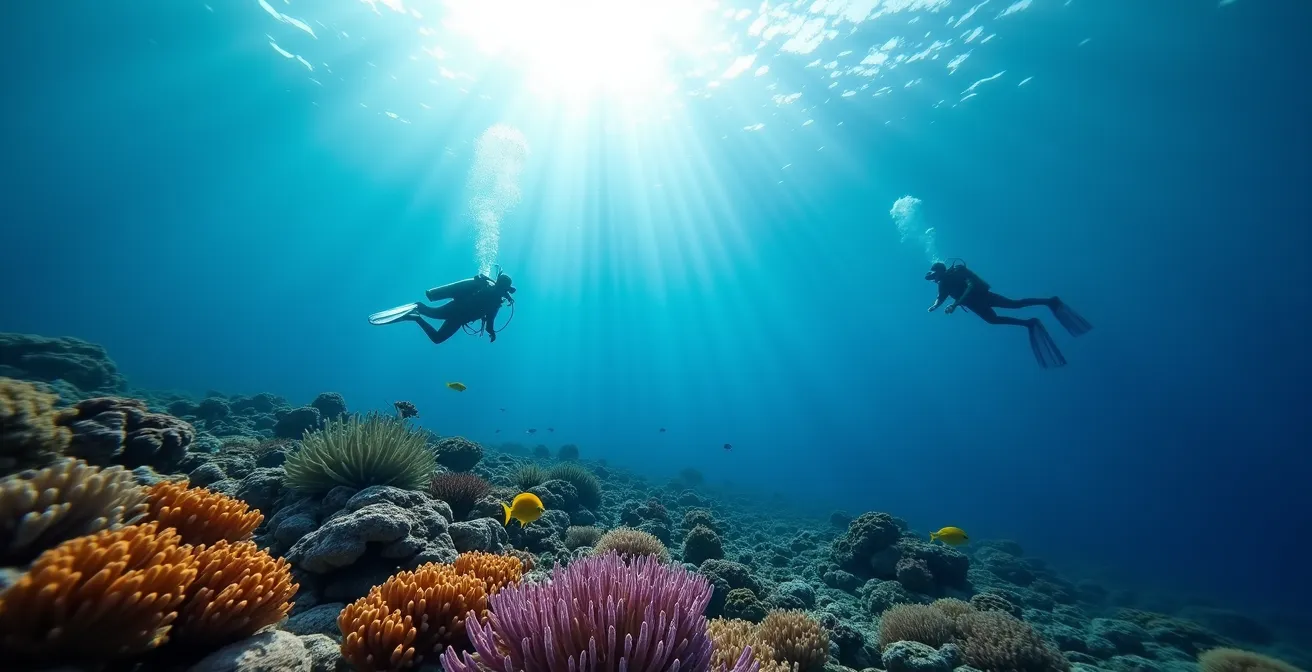
Contrary to popular belief, a tour operator’s “eco” label is often meaningless. The key to ethical marine tourism isn’t following a checklist, but learning to recognize the subtle, often invisible, signs of wildlife exploitation.
- A dolphin’s “smile” is an anatomical illusion; in captivity, it masks profound stress from living in a space less than 0.0001% of its natural home.
- “Natural” and “reef-friendly” are unregulated marketing terms. True reef-safe sunscreens rely on non-nano mineral ingredients, not chemical filters like oxybenzone.
Recommendation: Instead of trusting marketing, verify an operator’s certifications (like Green Fins) and ask direct questions about their policies on wildlife distance, anchoring, and contributions to local conservation.
The allure of the ocean is primal. We dream of gliding alongside a graceful manta ray, marveling at a vibrant coral reef, or witnessing the powerful breach of a whale. This desire for connection drives millions of us to the world’s coastlines, eager for an unforgettable experience. But a dark undercurrent runs beneath the surface of this global industry. The very animals and ecosystems we seek to admire are often harmed by the tourism built around them.
Most travelers have good intentions. We’ve heard the basics: don’t touch the coral, use the right sunscreen, and maybe skip the dolphin show. But these rules are just the tip of the iceberg. The reality is that many seemingly benign activities hide a world of stress, ecological damage, and exploitation. The industry has become masterful at “greenwashing”—using words like “sanctuary,” “eco-friendly,” and “rescue” to mask purely commercial operations that prioritize profit over protection.
But what if the solution wasn’t just to follow a simple list of dos and don’ts? What if the key to becoming a truly ethical tourist was to learn how to see the ocean through a biologist’s eyes? This guide is designed to shift your perspective. It will move beyond the platitudes and equip you with the critical thinking skills to become a “marine detective”—someone who can decipher the clues, ask the right questions, and distinguish genuine conservation from clever marketing.
By understanding the *why* behind the rules—the subtle signs of stress in a “smiling” dolphin, the chemical warfare waged by the wrong sunscreen, and the behavioral damage caused by a single piece of bread—you can make choices that truly protect the fragile marine world. This article will walk you through the most common traps and give you the tools to ensure your travel dollars support a healthier, more resilient ocean for generations to come.
To help you navigate these complex issues, this guide breaks down the critical areas where your choices can make the biggest difference. From deciphering animal behavior to verifying an operator’s credentials, here is what we will cover.
Summary: A Guide to Becoming an Ethical Marine Tourist
- Why “Smiling” Dolphins in Captivity Are Actually Stressed?
- How to Check Ingredients to Ensure Your Sunscreen Won’t Bleach Coral?
- Boat Tour or Aquarium: Which Experience Has a Lower Ecological Impact?
- The Feeding Mistake That Makes Fish Aggressive Towards Divers
- Where to Dive: Choosing Operators Who Respect Marine Sanctuaries
- The Label Mistake: Confusing “Natural” with “Certified Organic”
- Why “Complimentary” Insurance Often Has Insufficient Medical Limits?
- How to Reduce Your “Invisible” Digital Carbon Footprint?
Why “Smiling” Dolphins in Captivity Are Actually Stressed?
The image of a “smiling” dolphin is one of the most powerful and misleading tools in the marine tourism industry. That seemingly joyful expression isn’t an emotion; it’s a quirk of their facial anatomy. Behind that fixed smile, a captive dolphin or whale is experiencing a level of psychological and physical stress that is difficult to comprehend. The primary reason is the catastrophic lack of space. In the wild, cetaceans can travel 40-100 miles a day and dive to significant depths. A case study by World Animal Protection revealed that even in the world’s largest captive facilities, these animals have less than 0.0001% of their natural habitat range. This is the equivalent of a human spending their entire life in a bathtub.
This extreme confinement leads to a state of chronic stress and boredom, manifesting as abnormal “stereotypic” behaviors. You might see them logging (floating listlessly at the surface), swimming in repetitive circles, or gnawing on the concrete walls of their tanks. A study on orcas found this to be a pervasive issue, revealing that captive males spend nearly 70% of their time virtually motionless—a stark contrast to their constantly active lives in the ocean. This lack of physical and mental stimulation is devastating.
Furthermore, these animals are forced into unnatural social groupings, separated from their complex family pods, and made to perform tricks for food. This completely disrupts their natural behavioral baseline. A truly ethical encounter with these intelligent beings involves observing them from a respectful distance in their wild home, where they are in control—not forcing them to be performers in a sterile, undersized enclosure for our entertainment.
How to Check Ingredients to Ensure Your Sunscreen Won’t Bleach Coral?
One of the most direct impacts we have on marine ecosystems comes from something we do with the best intentions: protecting our skin from the sun. Unfortunately, most chemical sunscreens contain compounds that are catastrophic for coral reefs. When these chemicals wash off our bodies into the water, they can trigger coral bleaching, damage coral DNA, and disrupt their reproductive cycles. The scale of the problem is staggering; current estimates show that between 8,000 and 16,000 tons of sunscreen enter coral reef areas annually. This chemical assault is a major contributor to the decline of these vital “rainforests of the sea.”
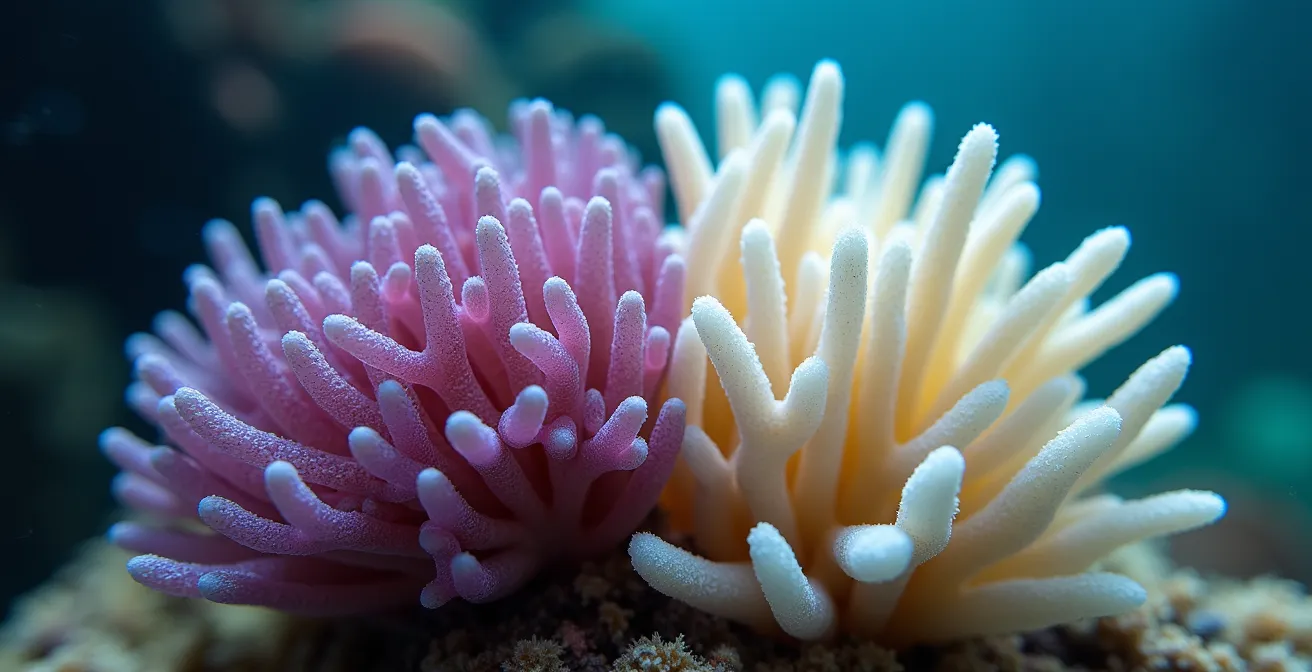
This macro-level photo shows the devastating visual contrast between healthy, vibrant coral and a section that has undergone bleaching, turning a stark white. It highlights the fragility of these ecosystems.
So how do you choose a sunscreen that is truly safe for the ocean? The key is to ignore vague marketing terms like “reef-friendly” or “natural” on the front of the bottle, as these are not regulated. Instead, you must become an ingredient detective and read the active ingredients list on the back. The most harmful culprits to avoid are oxybenzone and octinoxate, but a host of other chemical filters are also damaging. The only truly reef-safe options are mineral-based sunscreens that use non-nano zinc oxide or non-nano titanium dioxide as their active ingredients. “Non-nano” is crucial, as nanoparticles are small enough to be ingested by coral.
This table, based on NOAA guidelines, provides a clear reference for what to look for and what to avoid when purchasing sunscreen for your next beach vacation.
| Harmful Ingredients (Avoid) | Safe Alternatives (Choose) | Environmental Impact |
|---|---|---|
| Oxybenzone | Non-nano Zinc Oxide | Causes coral bleaching, DNA damage |
| Octinoxate | Non-nano Titanium Dioxide | Disrupts coral reproduction |
| Octocrylene | Mineral-based formulas | Accumulates in marine tissues |
| 4-MBC | Physical barriers only | Induces viral infections in corals |
Boat Tour or Aquarium: Which Experience Has a Lower Ecological Impact?
When faced with the choice between seeing marine life in a tank versus in the open ocean, the answer seems obvious: a boat tour is better. However, the reality is more nuanced. A poorly managed boat tour can cause significant harm through anchor damage to reefs, harassing wildlife, and polluting the water. Conversely, a handful of well-managed aquariums contribute significantly to research and conservation. The defining factor isn’t the venue, but the operator’s ethics and practices. The goal should always be to support operations that actively contribute to the health of marine ecosystems.
A shining example of how tourism can be a force for good is the Misool Eco Resort in Indonesia. As highlighted in a World Bank blog on the Blue Economy, the resort worked with local communities to establish an 828 square kilometer “no-take” marine protected area. By directly funding patrol boats through tourism revenue, they have effectively eliminated destructive fishing practices in the area. The results are phenomenal: within this zone, fish biomass and biodiversity have increased dramatically, creating a thriving ecosystem that also provides sustainable livelihoods. This demonstrates the gold standard: tourism that directly funds and incentivizes conservation.
Case Study: Misool Eco Resort’s Conservation Success
The Misool Eco Resort in Indonesia’s Raja Ampat region created a massive no-take marine protected area funded by its tourism operations. This initiative led to a significant recovery of fish populations and coral health, proving that responsible tourism can be a powerful engine for direct marine conservation. This model transforms tourists from simple observers into active funders of habitat protection, creating a win-win for the environment and local communities.
When vetting a boat tour operator, you must ask targeted questions to gauge their commitment. A responsible operator will welcome your inquiries. They should have clear policies on maintaining distance from wildlife (e.g., at least 100 meters for marine mammals), use mooring buoys instead of dropping anchors on sensitive reefs, and be able to articulate how they contribute to local conservation efforts, whether through data collection, funding, or education. An operator with a low guide-to-tourist ratio and a certification like Green Fins or Blue Flag is another strong positive signal.
The Feeding Mistake That Makes Fish Aggressive Towards Divers
It seems like a magical, harmless interaction: you hold out a piece of food, and suddenly you’re surrounded by a swirling school of colorful fish. Many tour operators even encourage this to guarantee a “wow” moment for their clients. However, this practice is incredibly destructive to both the fish and the ecosystem. Feeding wildlife creates a dependency cycle that fundamentally alters their natural behavior and jeopardizes their long-term survival. Fish that become accustomed to handouts lose their natural foraging skills and start to associate all humans with food.
This conditioning leads to several dangerous outcomes. As detailed in studies on marine behavior, artificially fed fish can become unnaturally aggressive, swarming and even nipping at divers and snorkelers in search of a meal. This completely erodes their natural predator avoidance instincts, making them vulnerable to predation when they are not surrounded by tourists. The shift in behavior is not temporary; this conditioning can persist long after the feeding stops, creating lasting disruption. The act of feeding transforms wild animals into beggars, a change that can be irreversible.
The Behavioral Impact of Artificial Feeding
Studies show that artificial feeding conditions fish to associate all humans with food sources, leading to aggressive swarming behavior, nipping incidents, and a complete loss of natural predator avoidance instincts. This behavioral conditioning persists even when feeding stops, creating long-term ecosystem disruption. The seemingly innocent act of feeding wildlife fundamentally and dangerously alters their relationship with their environment and with humans.
Beyond the behavioral changes, feeding has severe ecological consequences. As the Loggerhead Marinelife Center points out, this practice has a cascading effect on the environment. As they state in their eco-friendly travel tips: “Feeding fish disrupts natural foraging skills and creates diet dependency, while excess nutrients promote harmful algae growth and increase disease transmission within fish populations.” Never participate in tours that offer or permit the feeding of any marine wildlife. An operator who allows this is demonstrating a fundamental lack of respect for the ecosystem they are operating in.
Where to Dive: Choosing Operators Who Respect Marine Sanctuaries
Choosing a dive or snorkel operator is one of the most significant decisions you will make as a marine tourist. The right operator acts as a guardian of the reef, while the wrong one can cause untold damage. Responsible operators are committed to minimizing their ecological footprint. This includes having strict protocols for operating within marine sanctuaries, such as using mooring buoys instead of dropping anchors that can smash and destroy centuries-old coral colonies. They also enforce strict wildlife interaction rules, conduct thorough environmental briefings, and actively participate in conservation initiatives.
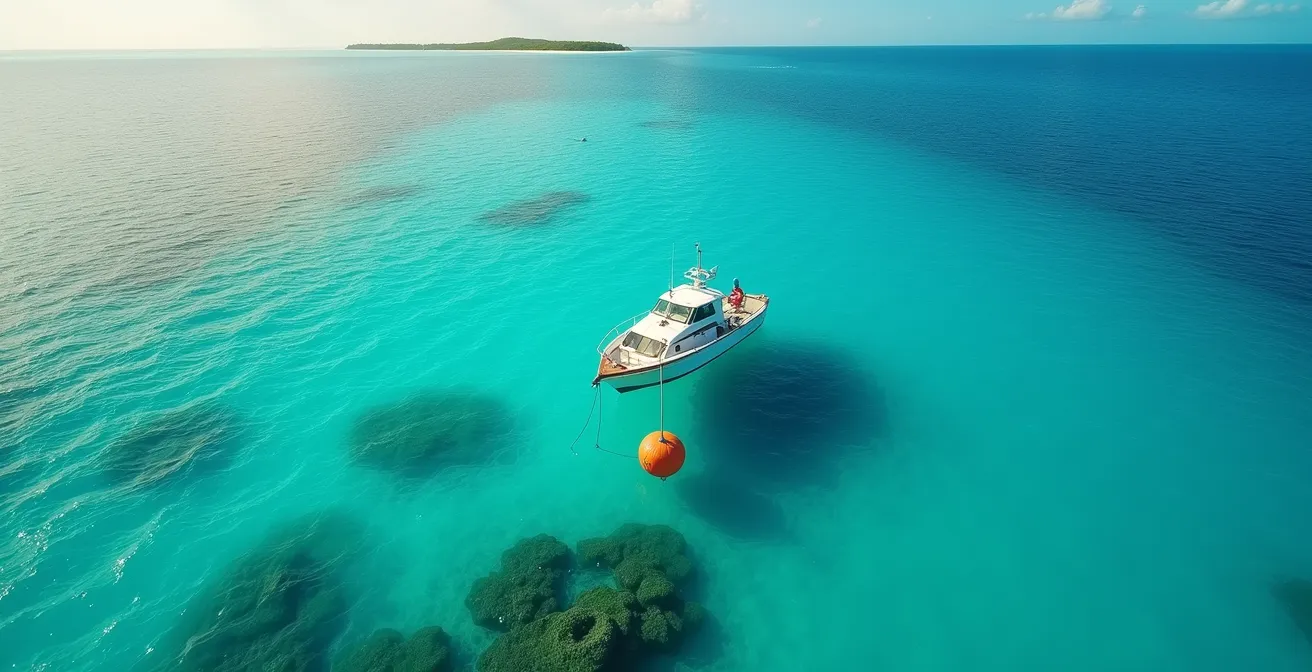
This image depicts the ideal scenario: a small, eco-certified boat using a permanent mooring buoy, ensuring its anchor does not damage the delicate coral reef visible below.
But how can a tourist tell the good from the bad? This is where certifications come in. While no system is perfect, reputable, third-party audited certifications are a strong indicator of an operator’s commitment. They provide a framework of standards that go far beyond simple marketing claims. It’s essential to understand what different certifications mean, as their rigor and focus vary significantly.
The following table compares some of the most recognized certifications in marine tourism, giving you a tool to assess an operator’s credentials. Look for operators who proudly display these logos and can speak knowledgeably about the standards they are held to.
| Certification | Key Requirements | Verification Level |
|---|---|---|
| Green Fins | No-anchor zones, wildlife distance protocols, waste management | Annual audits |
| Blue Flag | Water quality standards, environmental education, safety measures | Seasonal review |
| GSTC | Community benefits, cultural preservation, biodiversity protection | Third-party verified |
| PADI Green Star | Conservation activities, eco-briefings, marine life protection | Self-reported |
The Label Mistake: Confusing “Natural” with “Certified Organic”
In the world of eco-tourism, words are often used to obscure rather than clarify. This is the challenge of greenwashing, where operators use appealing but unregulated terms to create a false impression of environmental responsibility. Just as “natural” on a food label means very little without a “Certified Organic” seal, terms like “sanctuary,” “rescue center,” or “eco-park” in marine tourism can be highly misleading. A tourist’s greatest mistake is to take these labels at face value without investigation.
The “Sanctuary” Greenwashing Trap
Many facilities that are, in reality, commercial entertainment venues with captive breeding programs list themselves as “wildlife sanctuaries” or “rescue centers” on major travel websites. As the Dolphin Project notes, this is a classic greenwashing tactic. True sanctuaries and rescue centers focus on rehabilitation for release, never offer swim-with programs or charge for animal interactions, and maintain transparent public records of their rescue and rehabilitation work—a stark contrast to for-profit entertainment facilities.
A true sanctuary’s primary mission is the welfare of its animals, with a focus on rehabilitation and, whenever possible, release back into the wild. They do not engage in captive breeding programs to create more animals for entertainment. They do not offer “swim-with” programs or any direct contact experiences that treat animals as props. In contrast, many commercial facilities that use the “sanctuary” label are simply dolphinariums or aquariums in disguise, breeding animals into a life of confinement for profit.
To become a “marine detective,” you must learn to verify claims. Don’t just trust the operator’s website or a sticker on their window. A legitimate certification should be verifiable through the certifying body’s official website. This checklist provides a framework for auditing an operator’s environmental claims and seeing through the greenwashing fog.
Your Action Plan: How to Verify an Eco-Certification
- Check the official website of the certifying body (e.g., Green Fins, GSTC) to see if the operator is listed in their directory.
- Look for specific certification numbers and check their validity and expiry dates; a real certification is not for life.
- Investigate the certification’s standards: Does it require third-party, in-person audits, or is it a simple self-reported checklist?
- Research the specific actions the certification demands. Does it require waste reduction, community benefit, and strict wildlife protocols?
- Cross-reference the operator with endorsements from respected local or international conservation organizations.
Why “Complimentary” Insurance Often Has Insufficient Medical Limits?
It might seem unrelated, but an operator’s policy on travel and dive insurance is a powerful and often overlooked greenwashing signal. Unethical operators who cut corners on animal welfare and environmental protection are also highly likely to cut corners on guest safety. They are less likely to have rigorous safety standards, well-maintained equipment, or highly qualified guides. Consequently, they rarely inquire about or require guests to have adequate insurance for the specific activities they offer.
A basic, complimentary travel insurance policy provided by a credit card or a budget booking site almost never covers specialized activities like scuba diving. These policies often have low medical limits and explicit exclusions for what they deem “adventure sports.” An accident in a remote location can result in staggering costs for emergency medical evacuation and hyperbaric chamber treatment, costs that would not be covered. An operator who doesn’t even mention this is not prioritizing your well-being.
Conversely, the most professional and ethical operators often *require* their guests to show proof of specific, robust dive insurance, such as from the Divers Alert Network (DAN). As dive safety experts note, this requirement itself is a “green flag” indicating a high level of professionalism. It shows that the operator understands the real risks of the activity, takes safety seriously, and is prepared for emergencies. This commitment to safety is almost always correlated with a similar commitment to environmental ethics. An operator who cares about having a proper emergency action plan is also one who cares about having a reef protection plan.
Key Takeaways
- A dolphin’s “smile” is an anatomical feature, not a sign of happiness; confinement in tiny tanks causes immense stress.
- Avoid chemical sunscreens with oxybenzone and octinoxate. Choose non-nano mineral formulas to prevent coral bleaching.
- Vet all operators by verifying their certifications (like Green Fins) and asking about their specific conservation and safety policies.
How to Reduce Your “Invisible” Digital Carbon Footprint?
In our hyper-connected world, our impact on marine ecosystems doesn’t end when we leave the beach. It continues through the “invisible” footprint of our digital activities. The photos and videos we share on social media have a powerful, real-world effect. A seemingly innocent selfie with a captive dolphin or a post showing tourists crowding a sea turtle can normalize harmful interactions. This content creates social demand, which in turn fuels the growth of unethical industries. The explosion of new ocean theme parks, such as the 95% increase seen in China between 2015 and 2019, is driven in part by this demand generated through social sharing.
As an ethical tourist, your responsibility extends to how you curate and share your experiences online. The goal is to use your platform, no matter how small, to advocate for the ocean, not inadvertently promote its exploitation. This means making conscious choices about the images you post and the narrative you create around them. Instead of a simple aesthetic post, add educational captions about the species, the threats it faces, and the importance of conservation. Instead of geotagging a precise location of a vulnerable species (which can lead poachers or crowds to the area), tag the responsible tour operator or a conservation organization working to protect that habitat.
Booking directly with local, vetted operators rather than through large online travel agencies (OTAs) is another crucial part of reducing your invisible impact. While OTAs offer convenience, they can take a significant commission (up to 30%), reducing the amount of money that stays in the local community and supports conservation. Booking direct ensures that the maximum benefit goes to the people on the ground who are the true stewards of the marine environment.
Becoming an ethical marine tourist is a journey, not a destination. It’s about shifting your mindset from that of a passive consumer to an active, informed advocate for the ocean. By learning to see past the marketing and recognize the subtle signs of both harm and health, you empower yourself to make choices that truly matter. Your travel decisions are powerful; use them to support the operators who act as guardians of the sea and to protect the fragile beauty that drew you to the water in the first place.