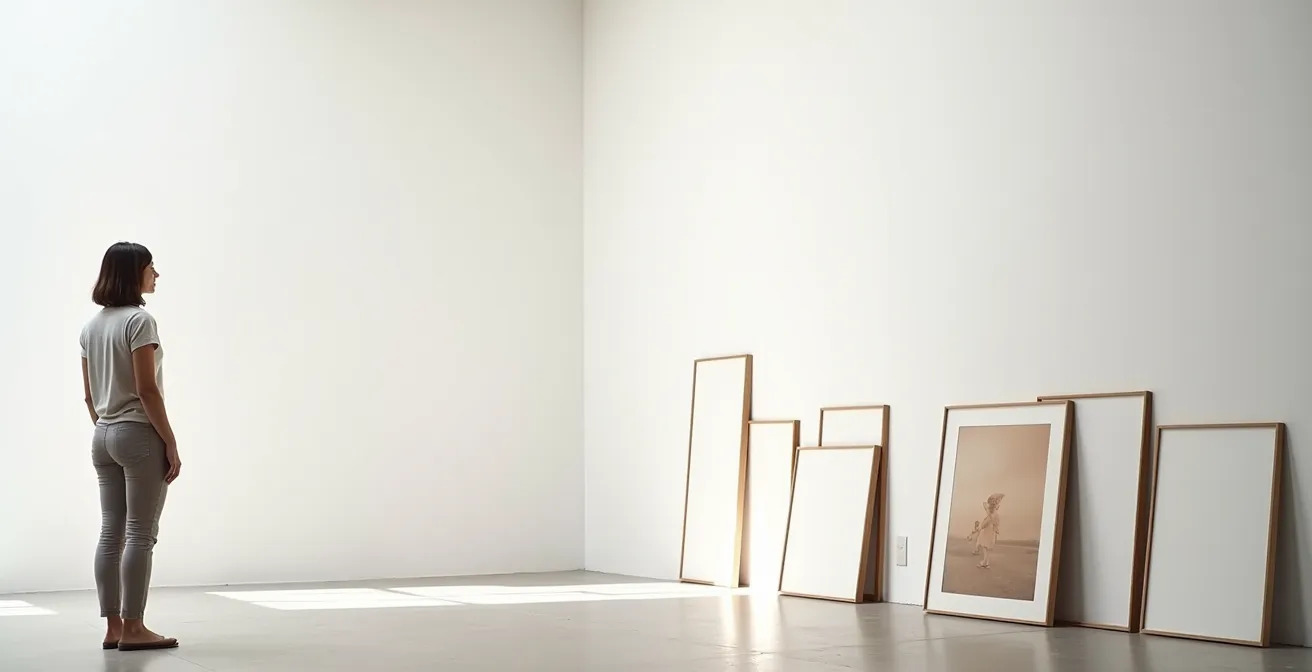
The secret to starting an art collection on a budget is to shift your mindset from finding cheap decor to identifying early value signals in emerging art.
- Limited edition prints and works on paper are strategic, asset-class entry points, not just poster alternatives.
- Focusing on “talent scouting” at art school shows and on Instagram allows you to acquire work before prices escalate.
Recommendation: Prioritize archival framing for any piece you acquire; it’s the single most important step in protecting both the physical integrity and the long-term value of your new asset.
The desire to live with real, meaningful art often feels at odds with the reality of a budget. For many young professionals, the dream of replacing generic posters with original work seems financially out of reach, reserved for an elite world of galleries and auction houses. The common advice is to settle for mass-produced prints or simply wait until you’re “rich enough.” This approach, however, misses the entire point of collecting.
Starting an art collection isn’t about having a massive budget; it’s about having a strategic eye. It’s about learning to see the difference between a simple picture and a piece with a story, provenance, and potential. The true key to building a collection you love, even with a modest $500, isn’t about finding the cheapest items. It’s about learning to recognize the subtle but crucial value signals that mark an emerging artist’s work as a potential asset.
This guide will demystify that process. We won’t just tell you where to look; we’ll show you what to look *for*. From understanding the hidden economics of limited edition prints to the critical importance of archival framing, you’ll learn how to make smart, informed decisions. This is your roadmap to transforming a blank wall into a personal gallery, one thoughtful, affordable piece at a time.
This article provides a complete framework for becoming a collector. You will discover why certain affordable art holds value, where to find emerging talent, and how to build a cohesive collection that enhances your space and enriches your life.
Summary: Your Guide to Collecting Art on a Budget
- Why Limited Edition Prints Hold Value Better Than Posters?
- How to Buy from Art School Degree Shows Before Artists Get Famous?
- Original on Paper vs Canvas: Which Is the Better Entry Point?
- The Framing Mistake That Ruins Your Art with Acid Burn
- When to Buy: Following Emerging Artist trends on Instagram
- Why Knot Count Matters Less Than Wool Quality for Rug Longevity?
- Why Personal Photos on Walls Drive Down Your Offer Price?
- How to Design a Modern Minimalist Interior That Reduces Anxiety?
Why Limited Edition Prints Hold Value Better Than Posters?
The first and most important mindset shift for a new collector is understanding the vast difference between a decorative poster and a limited edition print. A poster is a mass-produced image with no inherent scarcity. A limited edition print, however, is an asset. It’s a work of art conceived by the artist in a specific, finite quantity. This scarcity is the primary driver of its value. When an edition sells out, no more will ever be made, creating a closed market where value can appreciate.
The art market has taken notice of this accessible entry point. There has been a significant shift in collector interest towards this format, with market analysis showing a 35% increase in the volume of prints sold at auction in 2023. This demonstrates that prints are not just “cheaper art”; they are a serious category for collection and investment. The value of a print is determined by a combination of the artist’s reputation, the quality of the execution, and, most critically, the size of the edition.
For a new collector, this means you are not just buying a picture; you are buying a stake in an artist’s career. A hand-signed print with a small edition size (ideally under 50) and a certificate of authenticity is a tangible asset. It possesses provenance and scarcity—two pillars of value in the art world. It’s the most strategic way to own a piece of an artist’s vision without the price tag of a unique painting.
Your Checklist for Buying a Fine Art Print
- Edition Size: Ask for the exact number. An edition under 50 is more valuable than one of 250.
- Printing Method: Verify the technique. Screenprints, lithographs, and etchings are traditional methods; giclée is a high-quality digital print.
- Paper Quality: Confirm it’s archival. Look for “100% cotton rag” or “acid-free” paper to ensure longevity.
- Signature & Marks: Check if it’s hand-signed by the artist. Look for additional marks like ‘AP’ (Artist’s Proof), which are often more desirable.
- Authenticity: Always request a Certificate of Authenticity (COA) from the gallery or artist. This is your proof of provenance.
By focusing on these value signals, you move beyond simple decoration and begin making your first strategic acquisition as a collector.
How to Buy from Art School Degree Shows Before Artists Get Famous?
The world’s next great artists are not yet in blue-chip galleries; they are finishing their degrees in art schools. Graduate degree shows are the single best opportunity for a budget-conscious collector to engage in talent scouting. Here, you can discover and purchase work from artists at the very beginning of their careers, often for a few hundred dollars, before they have gallery representation and the associated price markups.
Attending these shows is less about speculation and more about connection. You have the unique opportunity to speak directly with the artists, understand the concepts behind their work, and build a relationship. As one art world insider notes, “Knowing that your support has contributed to an artist’s journey adds an emotional dimension to your collection.” This personal connection transforms a purchase into a piece of a shared story, which is the essence of a meaningful collection.
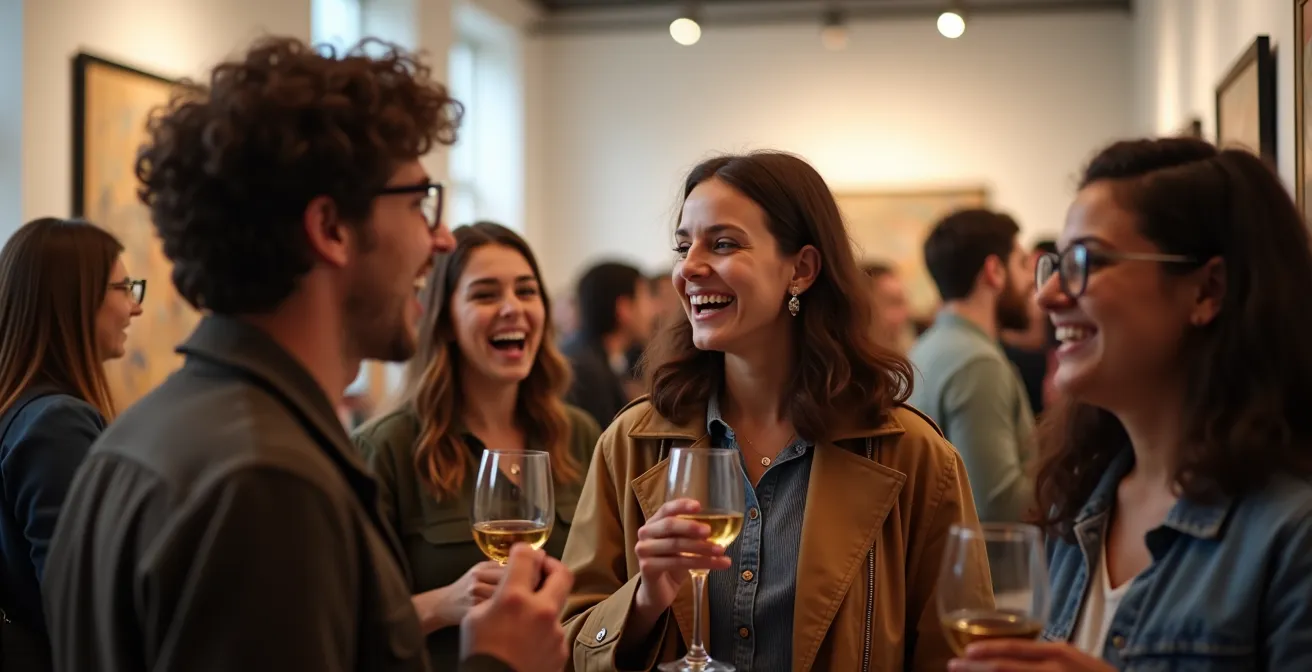
The key is strategic timing. The art school calendar has a predictable rhythm. According to an art school exhibition calendar analysis, the best times to visit are April and May for MFA (Master of Fine Arts) thesis shows and June for BFA (Bachelor of Fine Arts) shows. MFA shows are particularly valuable as these artists are more mature in their practice and on the cusp of entering the professional art market. Arriving on opening night offers the best selection, but visiting mid-week allows for quieter, more in-depth conversations with the artists.
Don’t just look at the art; look for the artist with a clear vision, a professional presentation, and a compelling story. That’s where you’ll find the most rewarding acquisitions.
Original on Paper vs Canvas: Which Is the Better Entry Point?
When considering an original, one-of-a-kind piece, new collectors often face a choice: a small work on canvas or a work on paper. While a painting on canvas feels like the traditional “gold standard,” works on paper—such as drawings, watercolors, or gouaches—are often the superior entry point for a collector on a $500 budget. The initial purchase price is typically lower, allowing you to acquire a piece from a more established artist than you could afford on canvas.
However, the initial price isn’t the whole story. Works on paper require archival framing behind UV-protective glass to prevent damage from light and the environment, which adds a significant cost. Canvases, on the other hand, are more durable and can often be hung unframed. A smart collector must consider the total first-year cost of an acquisition, not just the sticker price.
The following table breaks down the typical costs associated with each format, showing how the final investment can be surprisingly similar. A recent comparative analysis of first-year art costs highlights this balance.
| Factor | Works on Paper | Small Canvas |
|---|---|---|
| Initial Purchase | $200-300 | $350-450 |
| Archival Framing | $150-200 | Not required |
| Storage/Transport | Requires flat storage | More durable |
| Total First Year Cost | $350-500 | $350-450 |
| Space Flexibility | Can rotate easily | Ready to hang |
For a budget of $500, a work on paper offers greater flexibility. It allows you to acquire a more significant piece from an artist’s body of work and gives you more options. While the canvas is ready to hang, the framed work on paper often has a more polished, deliberate presence on the wall, signaling a move from casual decoration to a curated collection.
The takeaway is clear: don’t dismiss works on paper. They are a historically significant medium and a financially astute way to begin your journey with original art.
The Framing Mistake That Ruins Your Art with Acid Burn
Acquiring a beautiful piece of art is only the first step. The second, and arguably more critical, is protecting it. The single most destructive mistake a new collector can make is using cheap, non-archival framing materials. Standard frames from big-box stores often use mat boards and backing made with acidic wood pulp. Over time, this acid leaches into the artwork’s paper, causing a permanent, irreversible yellow or brown discoloration known as “acid burn” or “mat burn.” It can destroy the aesthetic and financial value of your art.
Investing in archival, or “conservation-grade,” framing is non-negotiable for any limited edition print or original work on paper. This means ensuring every component that touches the art is acid-free. This includes the mat board (which should be 100% cotton rag), the backing board, and the hinges used to mount the art. Furthermore, the glazing (the glass or acrylic front) should have at least 97% UV protection to prevent colors from fading over time.
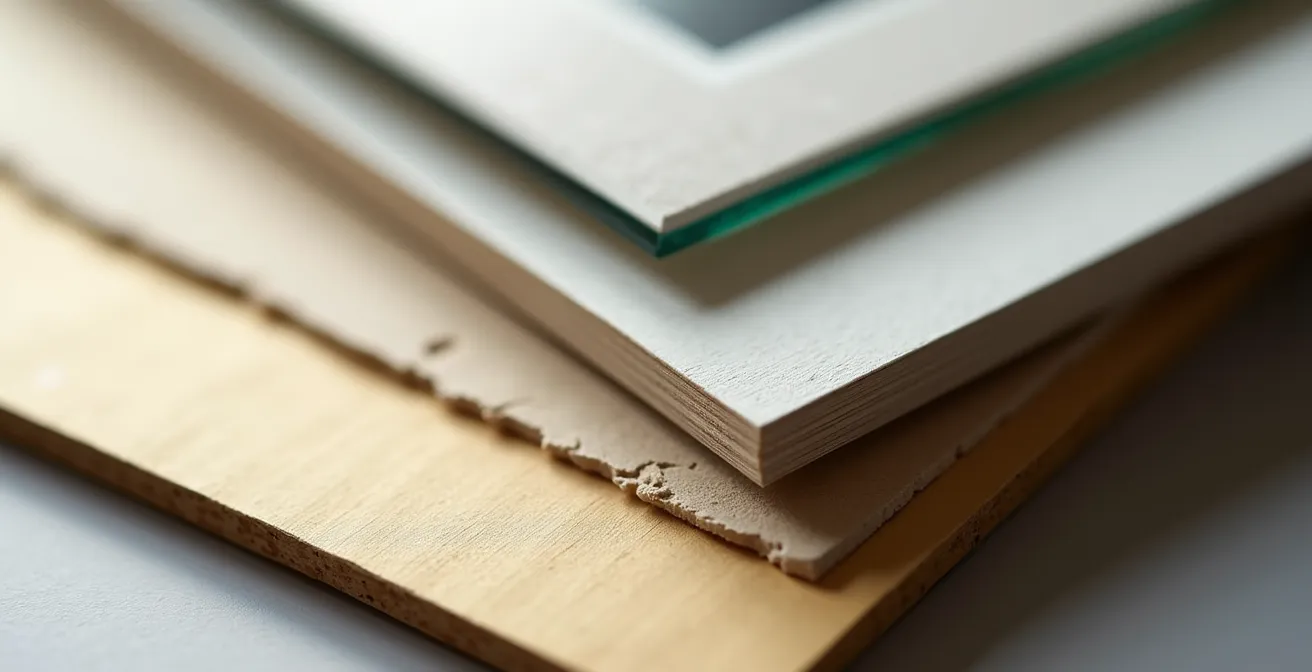
While professional archival framing can seem expensive, it should be factored into your acquisition budget. Think of it as insurance for your investment. There are ways to manage this cost. A savvy tip is to source unique or vintage frames from thrift stores or flea markets and then take them to a professional framer to be refitted with a new archival mat, backing, and UV-protective glass. This approach can save you 50-70% on the total framing cost while ensuring your art is fully protected for decades to come.
Never compromise on archival quality. A beautiful $300 print in a $20 acidic frame is a guaranteed loss; a $300 print in a $150 archival frame is an asset you can enjoy for a lifetime.
When to Buy: Following Emerging Artist trends on Instagram
In today’s art market, the gallery floor has expanded to the digital realm. For a new collector, platforms like Instagram are not just for inspiration; they are powerful tools for discovery and acquisition. By curating your feed, you can create a personalized art advisory service, spotting trends and identifying promising artists long before they are featured in major publications. The key is to follow the right accounts.
Instead of just following big-name artists, your strategy should be to follow 20-30 small gallery owners, independent curators, and art advisors. These individuals are the industry’s natural filters, constantly scouting for new talent. Their posts and stories are a live feed of who is up-and-coming. Look for signals of career momentum: an artist being tagged by a gallery, “work in progress” posts for an upcoming show, or a “sold out” announcement. These are the modern-day value signals.
Many artists also use platforms to sell smaller studies or works on paper directly to collectors. One powerful tool is the #ArtistSupportPledge, a movement where artists post works for sale for under a certain price point (e.g., $200). When an artist sells $1,000 of work, they pledge to buy a piece from another artist, creating a virtuous, supportive economy. This is a fantastic way to acquire affordable art while directly supporting the community. When you find an artist you admire, engage with their work thoughtfully before reaching out. A simple, professional direct message is often all it takes to inquire about available pieces.
- Follow 20-30 small gallery owners and independent curators as natural talent filters.
- Use hashtags like #ArtistSupportPledge to find artists selling directly at capped prices.
- Look for career momentum signals: gallery tags, ‘work in progress’ posts for upcoming shows.
- Track mentions in online art journals or ‘sold out’ posts as validation markers.
- Engage professionally: Like consistently and comment thoughtfully before reaching out via DM to inquire about available small works.
By treating your social media feed as a research tool, you can move from being a passive observer to an active, informed collector, ready to acquire a piece when the right opportunity arises.
Why Knot Count Matters Less Than Wool Quality for Rug Longevity?
In the world of oriental rugs, buyers often get fixated on “knot count” as the sole measure of quality. However, a seasoned expert knows that the quality of the wool is a far more important indicator of a rug’s longevity and beauty. This principle serves as a perfect metaphor for collecting art. New collectors can easily get distracted by superficial metrics—the “knot count” of art—while overlooking the substantive qualities that create lasting value.
The ‘knot count’ of art is a superficial metric (e.g., photorealism, size), while the ‘wool quality’ is the underlying concept, the artist’s reputation, and its place in art history.
– Art Collection Strategy Expert, Contemporary Art Market Analysis
What are the superficial “knot counts” in art? They can be an obsession with photorealistic technique, a preference for a large-scale piece over a more significant smaller work, or choosing a piece simply because its colors match your sofa. These are decorative concerns, not collecting criteria. The “wool quality,” on the other hand, refers to the underlying conceptual strength of the work, the artist’s unique vision, their educational background, their exhibition history, and the work’s context within contemporary art conversations.
One of the most important “wool quality” indicators for prints and multiples is edition size. It’s a hard metric of scarcity. While a large, beautiful print from an edition of 500 can be a lovely decorative object, its investment potential is minimal. Conversely, market analysis shows that contemporary art editions between 10 and 50 pieces are in the optimal range for value appreciation. Choosing a work from a smaller edition is a clear vote for “wool quality” over “knot count.”
Your goal is to build a collection of pieces with strong conceptual foundations and clear value signals, ensuring that what you buy today is not just beautiful, but meaningful and valuable tomorrow.
Why Personal Photos on Walls Drive Down Your Offer Price?
When staging a home for sale, real estate agents universally advise taking down personal photos. The reason is simple: it’s hard for potential buyers to imagine themselves living in a space that is so deeply personalized to someone else. While this advice is practical for selling a house, it reveals a deeper truth for those who want to live more artfully: a wall of purely personal photos creates a one-dimensional narrative. It tells a story about you, but it doesn’t invite conversation or broader cultural connection.
Transitioning from displaying only personal photos to curating a collection of art doesn’t mean erasing your personal story. Instead, it’s about elevating it. The concept of a “narrative wall” involves thoughtfully integrating select personal photos among art pieces. In this context, a cherished family photo is no longer just a snapshot; it’s an artifact placed in dialogue with prints, drawings, and paintings. This act of curation transforms a simple display into a personal museum, where your life story intersects with the larger story of art and culture.
The impact of this shift from a purely personal display to a curated collection is significant, affecting not just the aesthetic of a room but also its perceived sophistication and value.
| Aspect | Personal Photos Only | Curated Art Collection |
|---|---|---|
| Perceived Value | Decreases home appeal to buyers | Increases sophistication perception |
| Emotional Connection | Single-dimensional (personal only) | Multi-layered (personal + artistic) |
| Flexibility | Fixed to personal history | Can evolve with taste/time |
| Investment | No financial appreciation | Potential value growth |
| Conversation Value | Limited to personal stories | Opens cultural dialogues |
By beginning to collect art, you are not replacing your memories. You are building a richer, more layered environment for them to live in, creating a home that is uniquely yours yet universally resonant.
Key takeaways
- Starting a collection is an investment in assets, not just a purchase of decorations. Focus on value signals like scarcity and artist momentum.
- Works on paper and limited edition prints are the most strategic entry points for a budget under $500, provided you invest in archival framing.
- Adopt a “slow collecting” mindset: buy one meaningful piece you love per year rather than multiple impulse buys. This builds a cohesive and valuable collection over time.
How to Design a Modern Minimalist Interior That Reduces Anxiety?
The goal of a modern, minimalist interior is not to create a sterile, empty box. It’s to design a space that feels calm, intentional, and restorative—a sanctuary from the visual noise of the outside world. Paradoxically, the anxiety of “getting it right” can often lead to cluttered walls and impulse buys. The solution lies in adopting the principles of the “slow collecting” movement. This philosophy applies a mindful, long-term approach to acquiring art, perfectly aligning with minimalist design.
Slow collecting encourages you to set a modest annual budget—$500 is perfect—for one single, meaningful piece of art rather than filling your space with several cheaper, less impactful items. This forces you to be deliberate and thoughtful. Before any purchase over $250, you give yourself a 30-day consideration period. This simple rule prevents impulse buys and ensures the piece you bring home is one you truly connect with. The result is a home with fewer, but better, things. Each object, especially your art, has a story and a reason for being there.
Always, always trust your gut — you have to live with the artwork! Choose the piece you instinctively love; there is a reason something inside you resonated with that work.
– Emilya Colliver, Art Pharmacy Director
This approach directly reduces anxiety. Instead of the pressure to “finish” decorating, you embrace the journey of building a collection over time. You can practice “collection rotation,” displaying only one or two key pieces at a time while properly storing the others. This keeps your walls feeling fresh and uncluttered, allowing each piece to breathe and be fully appreciated. A single, powerful artwork on a clean wall has a far more profound and calming effect than a dozen mismatched frames. By focusing on quality over quantity and documenting the story of each acquisition, you create a harmonious interior that is a true reflection of your evolving taste and life story.
To begin this journey, the next logical step is to define your personal taste and start your research. Start by visiting local galleries, browsing art school portfolios online, and creating a private board of works that resonate with you, without the pressure to buy immediately.
Frequently Asked Questions About Starting an Art Collection
What makes framing ‘archival’ or ‘conservation-grade’?
Archival framing uses acid-free materials throughout: UV-protective glazing (glass or acrylic with 97%+ UV filtration), 100% cotton rag mat boards, acid-free backing boards, and reversible mounting techniques that don’t damage the artwork.
When should I invest in professional framing vs DIY?
For any signed, limited edition, or original work over $100, professional framing is recommended. For posters or open-edition prints under $50, quality off-the-shelf frames with upgraded acid-free mats can suffice.
How can I save on professional framing costs?
Source vintage frames from thrift stores and have them professionally refit with new archival materials. This can save 50-70% while maintaining conservation standards.