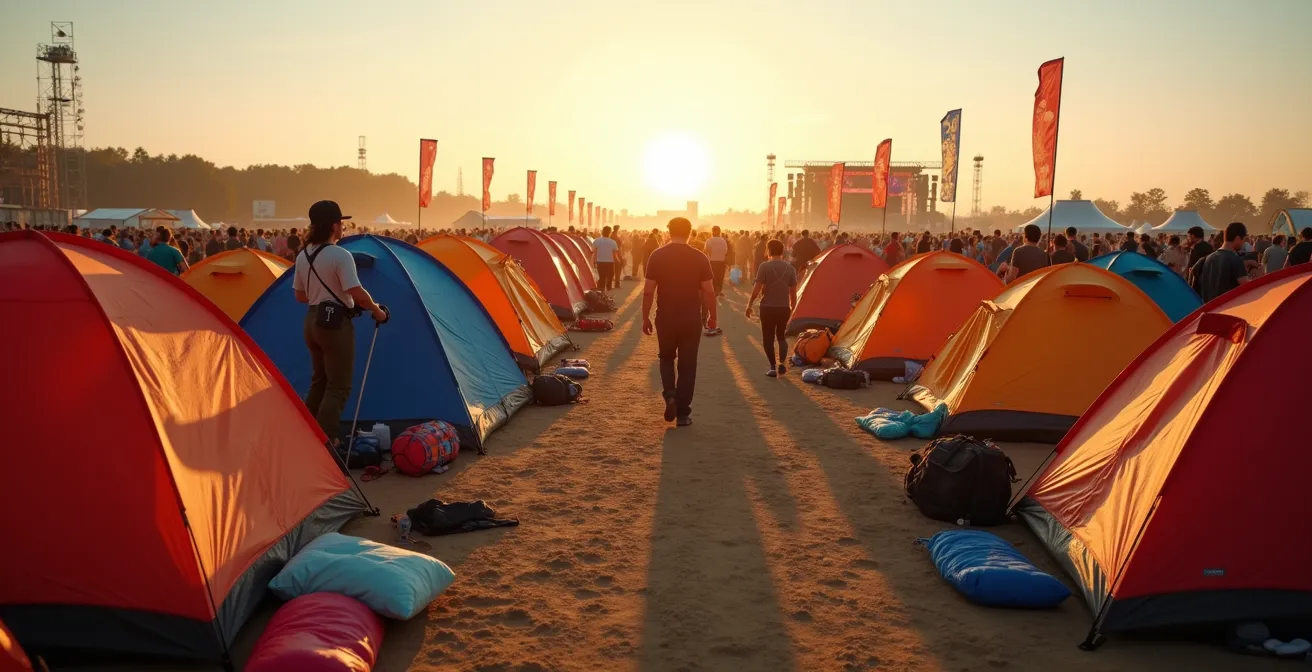
Surviving a festival isn’t about the gear you bring, but the survival systems you master before you even leave home.
- Sleep is a tactical operation, not a luxury. Your primary enemy is your neighbors, not the main stage.
- Hydration is a constant battle against a cumulative deficit that starts 48 hours before the festival.
Recommendation: Master the “Wet Wipe Protocol” and build a multi-sensory “Sleep Kit.” These two systems will solve 80% of a first-timer’s misery.
Listen up. You’re about to trade your warm bed and clean bathroom for three days of dirt, chaos, and non-stop noise. Every first-timer thinks the same thing: “What do I pack?” They make endless lists—tent, sleeping bag, sunscreen, a token pack of baby wipes. They think they’re prepared. They are wrong. The real war at a festival isn’t against the elements; it’s a battle for three critical resources: sleep, hygiene, and stamina. Lose one, and you lose them all.
The internet is full of cheerful advice about flower crowns and “staying hydrated.” That’s not a survival plan; it’s a recipe for a Day 2 burnout. You’ll see them, the unprepared, wandering like zombies by Sunday morning, their spirits broken by a snoring neighbor and a diet of warm beer and regret. They focused on the *what*, not the *how*. They brought the gear but had no system. This isn’t about just getting through it. This is about conquering it.
This is your field manual. We’re throwing out the generic packing lists. Instead, we’re going to install the battle-tested systems that separate the veterans from the victims. We’ll cover the tactical deployment of earplugs, the art of showering without a shower, the brutal math of hydration, and the logistical maneuvers that keep your energy levels high while everyone else crashes. Forget surviving. It’s time to learn how to dominate the festival experience from the moment you set up your tent to the long, tired drive home.
This guide breaks down the essential survival strategies you need to master. From securing quality sleep amidst the chaos to managing group logistics without losing your mind, each section provides a critical piece of the puzzle for a successful multi-day festival experience.
Summary: A Field Manual for Festival Camping
- Why Earplugs Are Essential for Sleep Even if You’re Far from the Stage?
- How to Shower Without a Shower: The Wet Wipe Protocol?
- Glamping vs Tent: Is the VIP Upgrade Worth the Price for Sleep?
- The Dehydration Trap: Drinking Alcohol in the Sun Without Water
- When to Shower: Avoiding the 9 AM Line at the Water Station
- The Dehydration Mistake That Makes Travel Fatigue Chronic
- How to Build a “Sleep Kit” That Blocks Out Snoring Neighbors?
- How to Organize Group Transport Without Logistics Nightmares?
Why Earplugs Are Essential for Sleep Even if You’re Far from the Stage?
The first mistake every rookie makes is underestimating the true source of noise. You think the thumping bass from the main stage, a mile away, is your enemy. It’s not. Your real adversary is 18 inches away, on the other side of a thin nylon wall. It’s the 3 AM tent-zipper orchestra, the couple having a whispered argument, and the guy who thinks 4 AM is the perfect time to inflate an air mattress with a foot pump. Sleep at a festival is not a passive activity; it’s a tactical operation you must win every night.
The noise that destroys your REM cycle is the high-frequency, unpredictable campsite chatter. A real-world campsite noise study from Bonnaroo found that the peak sleep disruption occurred between 2-4 AM, long after the headliners finished. The culprits were consistently late arrivals, loud conversations, and early packers. On the second night, a switch from basic foam to high-fidelity earplugs resulted in a reported three additional hours of quality sleep. That’s the difference between seeing the closing act on Day 3 and being passed out in a camping chair.
Your ears need a layered defense. Basic foam earplugs are your frontline soldiers, but they block everything, including your morning alarm or a friend yelling your name. High-fidelity silicone plugs are the special forces; they filter out the ambient drone while letting you hear conversations. For the lightest sleepers, noise-canceling earbuds playing white noise create a fortress of sound that is nearly impenetrable. Don’t just pack one pair. Pack three, and store them in different locations. Losing your only pair of earplugs on night one is a declaration of surrender.
How to Shower Without a Shower: The Wet Wipe Protocol?
The second pillar of festival misery is the loss of hygiene. By Day 2, a thin layer of dust, sweat, and spilled beer becomes your second skin. You see the line for the communal showers—a hundred people deep at 9 AM—and you feel your spirit break. The veteran knows the shower is a lie. The real path to feeling human is a disciplined, systematic approach I call the “Wet Wipe Protocol.” This isn’t about a quick swipe of a baby wipe; it’s a top-to-bottom tactical cleaning operation.
This system requires the right tools. Forget flimsy baby wipes that tear and dry out. You need large, thick, biodegradable body wipes. You need a separate pack for your face. Crucially, you need a small, collapsible basin. One veteran organizer from Electric Forest perfected this method: a nightly foot-washing ritual using just one liter of water in a basin before bed makes a monumental difference in perceived cleanliness and comfort. They also found that paper towels, not toilet paper, were superior for drying in humid conditions as they don’t disintegrate.

The protocol is simple. Every evening before you even think about crawling into your sleeping bag, you perform the wipe-down. Start with your face, then work your way down, using fresh wipes for different body zones. Finish with the foot wash. This entire process takes ten minutes, uses minimal water, and can be done in the privacy of your tent. It’s the single most effective way to reset your morale and prevent the grime from turning into a psychological burden. It’s not a shower, but it’s the next best thing, and it doesn’t cost you an hour of your morning.
Glamping vs Tent: Is the VIP Upgrade Worth the Price for Sleep?
At some point, bleary-eyed and sore, you will see the glamping tents. They stand like pristine palaces with real beds and private bathrooms, and the siren song of the VIP upgrade will call to you. Is it worth it? The answer is a brutal calculation of cost versus benefit. The core promise of glamping isn’t the fancy canvas; it’s a better chance at quality sleep. But that promise comes with a price tag that can be 10 times that of a basic camping spot.
A smart survivalist knows that you can often replicate the core benefits of glamping for a fraction of the cost. The key isn’t the tent itself but what you put inside it and where you place it. A case study in DIY glamping at Bonnaroo showed an attendee invested around $400 in a high-rise air mattress, a portable power station, and a private pop-up toilet tent. They reported sleep quality that matched the official VIP experience, but at 25% of the cost. Their most critical success factor? Arriving early to secure a quiet campsite away from the main thoroughfares, proving that location trumps luxury every time.
To make a strategic decision, you have to weigh the variables. The following breakdown gives you a cold, hard look at what you’re really paying for.
| Option | Cost (3 days) | Sleep Quality | Amenities | Social Factor |
|---|---|---|---|---|
| Basic Tent Camping | $50-150 | Variable (location dependent) | Shared toilets, no power | High interaction, party atmosphere |
| DIY Glamping Setup | $300-500 | Good (with proper gear) | Personal toilet, portable power | Moderate, more private |
| VIP Glamping | $800-1500 | Excellent (real bed) | Private bathroom, charging stations | Limited, quieter crowd |
Ultimately, the VIP upgrade is a luxury, not a necessity. It buys you convenience and a guaranteed good location. But if you are willing to plan, invest in a few key pieces of gear, and be strategic about your campsite selection, you can achieve 90% of the sleep benefit for a quarter of the price. For a true survivalist, that’s a clear victory.
The Dehydration Trap: Drinking Alcohol in the Sun Without Water
This is the most dangerous trap at any festival, and it’s the one that claims the most victims. The combination of sun, dancing, and alcohol creates a perfect storm for dehydration. It’s a silent enemy that saps your stamina, causes headaches, and can land you in the medical tent, ending your festival experience. Don’t be a statistic. Medical data is grimly clear on this: festival medical data shows that 73% of festival medical tent visits are dehydration-related, with alcohol being a contributing factor in the vast majority of severe cases. This isn’t an accident; it’s a failure of discipline.
Your body is losing water constantly, and you need a system to replace it proactively, not reactively. The golden rule is the 2:1 water-to-alcohol ratio. For every alcoholic beverage you consume, you must drink two bottles of water. Not later. Now. This isn’t a suggestion; it’s a command. A medical team at a heat wave festival reported that attendees who followed this simple rule had 60% fewer heat exhaustion incidents. It’s that effective.
Furthermore, water alone is not enough. When you sweat, you lose electrolytes—sodium and potassium—which are essential for muscle function and nerve communication. Chugging plain water can actually flush out the electrolytes you have left. You must supplement. Carry electrolyte packets or tablets with you at all times. Add one to your water bottle in the morning before you even leave the tent, another in the afternoon, and a final one before you go to sleep. This “super-hydration” before bed is your secret weapon against the morning-after crash. Ignoring electrolytes is like putting crude oil in a performance engine; it will eventually seize up.
When to Shower: Avoiding the 9 AM Line at the Water Station
If you decide to brave the communal showers, timing is everything. Observing the flow of human traffic at a festival reveals predictable patterns. The great migration to the showers begins around 8 AM and peaks between 9 AM and 11 AM. This is the dead zone. You will stand in line for over an hour, burning precious morning energy and goodwill towards your fellow man, all for five minutes of lukewarm, low-pressure water.
The veteran knows to operate outside these peak hours. Your strategy is to shower when everyone else is either sleeping, eating, or watching an early set. The first prime opportunity is the late afternoon slot, typically between 4 PM and 6 PM. Most people are back at their campsites, getting ready for the evening’s headliners, or are already heading towards the stages. The lines are often non-existent. A quick shower at this time can wash away the heat and grime of the day, acting as a powerful reset before the night begins.
The second, more hardcore option is the late-night shower, post-midnight. After the music ends and you’ve made the long trek back to the campsite, the showers are usually deserted. While the idea of a cold shower late at night might seem unappealing, it’s far better than the 9 AM queue. It also means you go to bed clean, which significantly improves sleep quality and keeps your sleeping bag from becoming a biohazard. If neither of these options works, fall back on the Wet Wipe Protocol. Wasting an hour in the morning for a mediocre shower is a rookie move and a strategic failure.
The Dehydration Mistake That Makes Travel Fatigue Chronic
The biggest misconception about festival dehydration is that it’s a single-day event. It’s not. It’s a cumulative deficit that builds day after day, and it doesn’t end when the music stops. The fatigue, brain fog, and general malaise you feel for a week after the festival is often not just post-party blues; it’s a physiological response to chronic, unresolved dehydration. A study on post-festival recovery showed that attendees who were even mildly dehydrated for three consecutive days took 7-10 days to return to normal energy levels, while those who maintained hydration recovered in just 2-3 days.
Your battle against this chronic fatigue begins 48 hours before you even leave for the festival. This is the pre-hydration phase. You must consciously increase your water intake by at least 50% to build a reserve. The travel day itself is a critical weak point. Sitting in a hot car for hours is incredibly dehydrating. Keep a hydration pack accessible in the passenger seat, not buried in your luggage. Stop every 90 minutes for a mandatory water break.
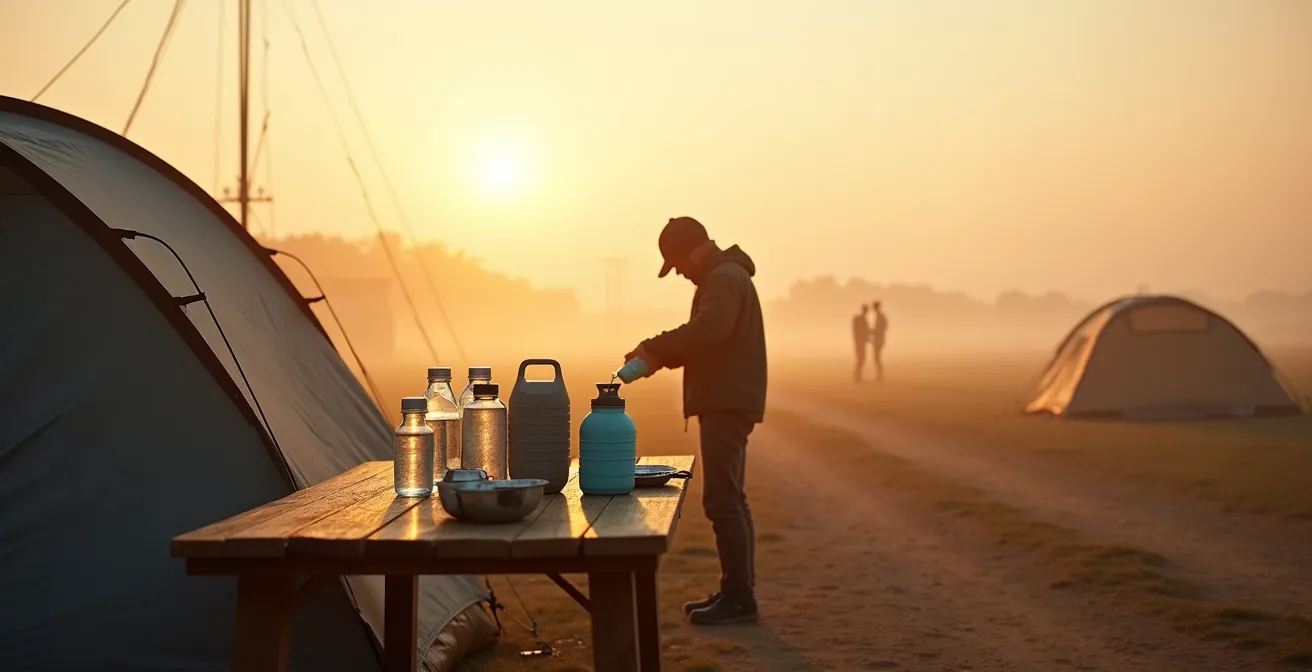
The recovery phase is just as important. Don’t wait until you’re home to start rehydrating. The process begins the morning you leave. Drink a full liter of electrolyte-infused water with your breakfast before you even start packing up the tent. For the entire week following the festival, you must continue to drink more water than usual—an extra 32oz per day is a good benchmark—to help your body flush out toxins and fully recover. Treating the festival as a multi-week endurance event, not a 3-day sprint, is the key to avoiding that lingering, week-long exhaustion.
Your Pre- and Post-Festival Hydration Protocol
- Pre-Hydration (T-48 hours): Begin increasing daily water intake by 50% to build a systemic reserve.
- Travel Day Operations: Pack a full hydration pack in the car and enforce a mandatory water break every 90 minutes of driving.
- Cumulative Deficit Tracking (Festival Days 1-3): Acknowledge that each day of even mild dehydration compounds the problem. Track your intake rigorously.
- Recovery Ignition (Departure Day): Start recovery hydration with electrolytes at breakfast, not when you get home. This is non-negotiable.
- Full Recovery (Post-Festival Week): Maintain an elevated hydration level (at least an extra 32oz/day) for a full 7 days to ensure complete system recovery.
Key takeaways
- Festival survival is a game of systems, not gear. Master the protocols for sleep, hygiene, and hydration.
- Your biggest threats are your immediate neighbors and your own lack of discipline, not the festival environment itself.
- Hydration is a week-long battle, starting 48 hours before and ending a week after the event.
How to Build a “Sleep Kit” That Blocks Out Snoring Neighbors?
We’ve established that sleep is a tactical operation. Your “Sleep Kit” is your arsenal. This is not just a pair of earplugs tossed into a bag; it’s a multi-sensory deprivation system designed to create a pocket of darkness and silence in the middle of a warzone. Building this kit is one of the highest-leverage activities you can do to ensure your survival.
The foundation of the kit is a layered sound-blocking strategy. Start with high-quality, moldable wax or foam earplugs that offer at least 32dB of noise reduction. This is your first line of defense. The second layer is active sound masking: a white noise app on your phone (with a pre-downloaded offline playlist) connected to a small, portable speaker. The constant, unchanging sound of rain or static is far less jarring to a sleeping brain than the unpredictable cadence of a snoring neighbor or a distant shouting match.
Case Study: The Power of Strategic Campsite Selection
An experienced festival camper documented their strategy for achieving over seven hours of sleep per night amidst 10,000+ campers. The key was not just their multi-sensory sleep kit but their campsite selection. They arrived early to choose a spot upwind from the main camping area, over 100 feet from primary pathways, and near a natural barrier like a line of trees. This proactive positioning, they concluded, prevented an estimated 70% of potential noise issues before they even had to reach for their earplugs, proving that good strategy is the ultimate sleep aid.
The next element is total light deprivation. Your eyelids are not enough. You need a contoured blackout eye mask. The cheap, flat ones given out on airplanes are useless; they put pressure on your eyes and leak light. A contoured mask creates a seal around your eye sockets, plunging you into the total darkness necessary for melatonin production. Finally, consider comfort and temperature. An inflatable, ergonomic pillow is a game-changer over a balled-up hoodie. A moisture-wicking sleeping bag liner can be the difference between a sweaty, restless night and a comfortable one. These items are not luxuries; they are essential tools for winning the war for sleep.
How to Organize Group Transport Without Logistics Nightmares?
The first test of your group’s survival skills happens before you even see the festival gates. Organizing transport and arrival is a logistical minefield that can detonate friendships and derail the entire trip. Vague plans, last-minute changes, and disputes over gas money are classic rookie mistakes. A veteran group operates like a military unit, with clear communication, defined roles, and no room for ambiguity.
The single most effective tactic is to appoint a “Logistics Captain” four weeks before the festival. This person is the sole point of contact for all transport-related matters. They create a shared Google Doc that contains driver assignments, passenger lists, precise departure times, and a clear breakdown of shared costs. All money for gas and parking passes is collected upfront via a digital payment app. There are no IOUs in a successful festival deployment. This eliminates the awkwardness and potential conflict of chasing people for money on-site.
Contingency planning is also critical. Your plan must account for failure. What happens when you inevitably get separated upon arrival with no cell service? Establish a clear, simple protocol: “If we are separated, everyone meets at the main entrance flagpole at 4:00 PM. No exceptions.” Build a 90-minute buffer into your departure time to account for the one person who is always late. The goal is to remove decision-making and potential friction from a high-stress environment. A solid plan means you arrive as a cohesive unit, not a fractured group of resentful individuals.
Action Plan: Festival Group Transport System
- Appoint a ‘Logistics Captain’: Designate one person four weeks out as the single point of contact for all communication.
- Create a Centralized Plan: Use a shared Google Doc to list drivers, passengers, departure times, and cost splits. Transparency is key.
- Collect All Funds Upfront: Use an app like Venmo or PayPal to collect all money for gas and passes beforehand. No IOUs.
- Establish Redundant Protocols: Set a clear meeting point and time for arrival in case of separation and failed cell service. Build in a 90-minute departure buffer.
- Confirm Backup Communication: Designate a backup communication method (e.g., walkie-talkies, a pre-set check-in time) for when cell networks inevitably fail.
By internalizing these systems—for sleep, hygiene, hydration, and logistics—you shift from being a passive victim of the festival environment to an active operator within it. This is the fundamental difference between merely surviving and truly conquering the experience.