Mobility & Transportation
The modern transportation landscape has evolved into a complex ecosystem where multiple modes, technologies, and service providers intersect daily. Whether you’re navigating a daily commute, planning business travel, or embarking on long-distance journeys, understanding how to efficiently combine options, protect yourself, and optimize costs has become essential rather than optional.
This comprehensive resource connects the fundamental elements of contemporary mobility—from selecting the right micro-mobility device for your final commute segment to managing range anxiety on electric road trips, from ensuring personal safety in ride-sharing services to claiming compensation when flights fail. Each decision point involves practical considerations that, when understood properly, transform travel from a source of stress into a predictable, manageable experience.
Last-Mile Connectivity and Micro-Mobility Solutions
The distance between mass transit stops and final destinations—commonly called the last-mile problem—remains one of urban mobility’s persistent challenges. Traditional solutions like walking or waiting for connecting buses often add 15-30 minutes to each journey leg, creating significant time inefficiency.
Portable and Compact Options
Foldable electric scooters, compact bikes, and even electric skateboards have emerged as practical bridging tools. The selection criteria hinge on three factors: portability (can you carry it onto a train or bus?), range (will the battery last your typical distance?), and storage security. A device that folds to briefcase size offers maximum flexibility but typically sacrifices battery capacity, while larger models provide comfort but limit where you can take them.
Theft Prevention Strategies
Micro-mobility devices face substantial theft risk, with industry estimates suggesting one in five shared scooters experiences theft attempts. For personal devices, layered security proves most effective:
- Primary locks with hardened steel shackles rated for outdoor use
- GPS tracking devices hidden within the frame or battery compartment
- Removable batteries that eliminate the device’s primary value when separated
- Engraving or permanent marking that reduces resale value for thieves
The timing of your route matters significantly—traveling during peak hours when surveillance is naturally higher reduces risk, while parking near established bike racks or within camera view creates additional deterrence.
Multi-Modal Integration: Connecting Different Transport Modes
True transportation efficiency emerges not from individual vehicles but from seamless transitions between modes—train to bike-share, bus to ride-hailing, metro to scooter. Each connection point represents both an opportunity and a potential failure point.
Successful integration depends on three pillars: physical infrastructure (are connection points logically placed?), schedule synchronization (do arrivals align with departures?), and information accessibility (can you track both modes in real-time?). Modern aggregator apps attempt to solve the information challenge by combining multiple providers into single interfaces, but their reliability varies dramatically.
When comparing aggregator platforms, prioritize those that display real-time updates rather than scheduled times, show walking distances between connection points with actual routing (not straight-line estimates), and maintain historical accuracy ratings. Weather disruptions expose system weaknesses—a platform that automatically suggests covered walking routes or delays during rain demonstrates superior design thinking.
Transfer zones require strategic optimization. Arriving at an interchange with a 3-minute buffer sounds efficient but ignores human factors: crowd navigation, ticket validation delays, and platform familiarity. Transportation researchers suggest minimum 8-10 minute buffers for unfamiliar connections, reducing to 5-6 minutes for daily routes where you’ve learned the optimal walking paths and can move with confidence.
Personal Safety in On-Demand Transportation
The convenience of summoning transportation through an app creates specific safety considerations that differ fundamentally from traditional taxis or public transit. The anonymity of digital platforms requires proactive verification steps.
Pre-Trip Verification Protocols
Before entering any vehicle, implement a systematic check sequence:
- Verify the license plate matches exactly (not just similar)
- Confirm the driver’s displayed name against the app
- Check the vehicle make and color against app information
- Wait for the driver to state your name—never provide it first
Wrong vehicle entry represents a measurable safety risk. Perpetrators occasionally position themselves at popular pickup locations, relying on passengers’ assumptions and hurried behavior. This simple verification sequence eliminates that vulnerability entirely.
Real-Time Safety Features
Platform safety features vary considerably in sophistication. GPS tracking with journey sharing allows trusted contacts to monitor your route in real-time, while emergency assistance buttons provide direct connection to safety teams or local authorities. When comparing platforms, verify whether safety features function without mobile data connection—some rely exclusively on internet connectivity, becoming useless in signal-poor areas precisely when you might need them most.
Pickup location optimization contributes to safety beyond mere convenience. Well-lit areas with natural surveillance (restaurants, hotel entrances, staffed buildings) provide inherently safer meeting points than empty street corners, even if they require 60 seconds of additional walking.
Cost Optimization for Short-Term Vehicle Access
Car-sharing and short-term rental services present complex pricing structures designed to maximize provider revenue while appearing competitive. Understanding these structures transforms cost management from guesswork to systematic optimization.
Most services combine three cost components: base time rates, distance charges, and conditional fees. The conditional fees—late returns, cleaning charges, fuel level penalties, toll processing—often exceed the base rental cost for unprepared users. Analyzing the complete cost structure before booking reveals the true expense.
Pre-existing damage documentation serves as your primary defense against false charges. Before moving any rental vehicle:
- Photograph all sides of the exterior in adequate lighting
- Document existing scratches, dents, or paint damage with close-ups
- Capture interior condition, particularly seats and dashboard
- Note fuel level and odometer readings with timestamps
These photos, stored with metadata intact, provide irrefutable evidence if disputes arise. Fleet model comparison matters more than promotional pricing—a slightly more expensive vehicle with better fuel efficiency or easier parking dimensions often delivers lower total cost for urban use. Advance booking, particularly during peak demand periods, typically provides 15-30% cost advantages over spontaneous rentals, as dynamic pricing algorithms increase rates when availability tightens.
Electric Vehicle Challenges and Practical Solutions
Electric mobility introduces unique challenges that differ fundamentally from conventional fuel-based transportation, requiring adapted planning and management strategies.
Managing Range Anxiety on Long Trips
Dashboard range estimates use algorithms that factor recent driving behavior, climate control usage, and terrain. These estimates fluctuate significantly—what displays as 200 kilometers at departure might drop to 160 after climbing elevation or running air conditioning. Rather than trusting the dashboard exclusively, experienced EV users employ charging aggregator apps that map available charging stations with real-time functionality status, preventing the frustrating arrival at broken chargers.
Connector speed comparison proves critical: Level 2 chargers add roughly 20-40 kilometers of range per hour, making them suitable for meal stops but inadequate for quick breaks, while DC fast chargers deliver 150-300 kilometers per hour but cost significantly more. Timing your stops to coincide with meals or activities transforms charging from waiting time into productive multitasking.
Cold Weather Battery Maintenance
Battery chemistry fundamentally changes in cold conditions. Lithium-ion batteries—the standard for electric bikes and vehicles—experience reduced capacity and charging efficiency below 10°C (50°F), with severe impacts below freezing. Understanding this cold chemistry effect prevents damage and maintains performance.
Proper storage involves keeping batteries at moderate temperatures (15-20°C / 59-68°F) when not in use, never leaving them in freezing conditions overnight, and storing at 40-60% charge for extended periods rather than full or empty. Charging errors in winter often stem from plugging in immediately after cold exposure—allowing the battery to warm to room temperature before charging prevents internal damage and improves charge acceptance. Winter charging should ideally occur in heated spaces and may require extended time compared to summer charging cycles.
Health and Wellness for Frequent Travelers
Constant mobility creates specific health challenges that compound over time: disrupted eating patterns, limited physical activity, accumulated sleep debt, and circadian rhythm disturbances.
Physical Health Maintenance Strategies
Airport nutrition presents particular challenges, with available options typically emphasizing convenience over nutritional value. Packing travel-safe snacks—nuts, dried fruit, protein bars, whole grain crackers—provides control over nutrition quality and timing. This preparation proves especially valuable during unexpected delays when hunger drives poor food choices.
Maintaining physical activity while traveling requires adaptable approaches. Comparing workout options across contexts:
- Hotel gyms offer familiarity but vary dramatically in equipment quality
- Bodyweight routines require no equipment and adapt to any space
- Walking meetings or extended layover walks combine productivity with activity
- Resistance bands pack flat and enable strength training anywhere
Timing meal windows consistently, even across time zones, helps regulate metabolism and energy levels. Travelers who maintain approximate meal spacing (rather than eating by local clock time immediately) report reduced digestive disruption.
Sleep Quality and Jet Lag Management
Sleep on budget long-distance transport requires addressing three primary disruptors: vibration, noise, and positioning. Road vibration mitigation starts with seat selection—positions over axles experience maximum movement, while mid-vehicle or front sections typically offer smoother rides. Packing sleep essentials—memory foam neck pillows, eye masks, and noise-canceling earphones—creates a consistent sleep environment regardless of external conditions.
Jet lag severity relates directly to travel directionality—eastward travel (shortening your day) typically causes more severe symptoms than westward travel (lengthening your day), as humans naturally find it easier to stay awake longer than to sleep earlier. Strategic light exposure proves most effective: seeking bright light in local morning hours and avoiding light in local evening hours gradually shifts your circadian rhythm. Melatonin protocols can accelerate adjustment, with optimal timing at 2-3 hours before desired sleep time in the new time zone, though individual responses vary significantly.
Navigating Disruptions and Claiming Passenger Rights
Transportation disruptions—construction delays, flight cancellations, schedule changes—occur regularly, but many travelers fail to exercise their compensation rights or navigate disruptions efficiently.
Construction and roadwork delays challenge even sophisticated GPS systems. GPS blind spots emerge because mapping data updates lag behind rapidly changing construction zones, sometimes by weeks. Experienced local drivers develop route knowledge that algorithms lack, making local resources like regional traffic radio or community-specific apps valuable supplements to GPS navigation. Comparing route types (highway versus arterial, direct versus scenic) reveals that the fastest algorithmic route may not optimize for current conditions—sometimes the technically longer route avoids bottleneck-prone areas.
For flight disruptions, many airlines employ delay tactics that minimize their compensation exposure while appearing helpful. Understanding your rights proves essential. Documentation requirements include:
- Original booking confirmation with flight details
- Boarding passes or check-in confirmations
- Official delay or cancellation notifications
- Photos of departure boards showing status
- Records of expenses incurred due to the disruption
Compensation offers from airlines often undervalue actual entitlements, particularly for international flights governed by regulations like EU261 or similar frameworks. Comparing offers against regulatory requirements—not against the airline’s “goodwill gesture” framing—reveals actual entitlements. Timing claim submission matters: regulations typically allow months or years for claims, but airlines process early claims more readily than those approaching deadline limits.
Organizing Group Transportation Logistics
Group travel multiplies individual transportation challenges, introducing coordination complexity that requires systematic planning rather than improvisation.
Headcount accuracy seems trivial but frequently causes problems—confirming exact numbers 24-48 hours before departure, then reconfirming the morning of travel, prevents the common scenario of booking for 12 when 14 actually arrive. Coordinating pickup points for distributed groups requires selecting locations with adequate waiting space, visibility, and accessibility. A theoretically central location that lacks parking or safe waiting areas often proves inferior to a slightly offset location with better infrastructure.
When comparing transport modes for groups, consider total cost including hidden factors:
- Private buses offer predictability but carry fixed costs regardless of actual attendance
- Multiple ride-shares provide flexibility but complicate coordination and timing
- Public transit minimizes cost but maximizes complexity and schedule dependency
- Rental vans balance cost and flexibility but require qualified drivers
Luggage overflow represents a frequent failure point—participants consistently underestimate their baggage volume. Building buffer zones into every timeline (departures, connections, arrivals) prevents the cascading delays that occur when the first element runs slightly late, consuming all slack in the system.
Mastering modern mobility requires understanding these interconnected elements—from micro-decisions about which scooter to select, to macro-planning of multi-modal journeys, to protecting your health and rights throughout. Each component influences the others, creating a system where informed choices compound into significantly improved travel experiences. Whether you’re optimizing daily commutes or planning complex international trips, these fundamental principles provide the framework for confident, efficient movement through our increasingly connected transportation networks.

How to Organize Group Transport Without Logistics Nightmares?
In summary: Shift from being a planner to a logistics system architect to anticipate problems before they happen. Replace unreliable headcounts with binding digital RSVPs that collect crucial data and financial commitment. Implement a multi-layered communication protocol using a “Single…
Read more
How to Claim Compensation for Delayed Commercial Flights?
Contrary to what airlines want you to believe, compensation for a disrupted flight is not a favor to be requested but a legal debt to be collected. Airlines systematically exploit an information imbalance, banking on passengers being unaware of their…
Read more
How to Eliminate Jet Lag on Eastbound International Flights?
In summary: Eastbound travel is biologically harder because it requires a “phase advance,” fighting your body’s natural tendency to delay its internal clock. Use a low dose (0.5-1 mg) of fast-release melatonin timed precisely in the afternoon of your departure…
Read more
How to Maintain a Healthy Diet During Frequent Business Travel
In summary: Maintaining health on the road is not about willpower but about managing your body’s physiological response to travel stress (cortisol, blood sugar, dehydration). Prioritize protein and fiber in TSA-compliant snacks to stabilize energy levels and avoid the crash…
Read more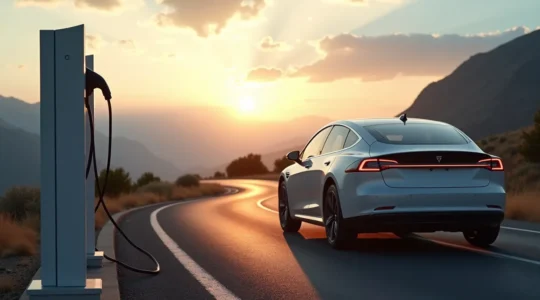
How to Plan an EV Road Trip and Finally Conquer Range Anxiety
The key to a stress-free EV road trip isn’t the car’s range estimate, but your ability to create a predictable travel system based on real-world data. Your EV’s range drops significantly at highway speeds; you must calculate your own “personal…
Read more
How to Actually Get Deep Sleep on an Overnight Bus: A Traveler’s Guide
In summary: True bus sleep requires actively counteracting vibration, sensory overload, and postural instability. Focus on building a personal “sleep cocoon” using a strategic kit and body positioning techniques. Prepare your body for sleep 30 minutes before boarding and have…
Read more
Plane vs High-Speed Rail: Calculating the True Productivity Cost of a 4-Hour Trip
For any business trip under 4-5 hours, high-speed rail consistently outperforms air travel in delivering uninterrupted, productive work time. The “door-to-door” time of flying is deceptive, hiding significant “Productivity Delta” losses in security lines, transfers, and non-conducive work environments. Train…
Read more
How to Plan Road Trips Around Major Regional Infrastructure Repairs?
Relying solely on your GPS for construction is a recipe for gridlock; the key is to think like a traffic engineer. Real-time GPS apps have an information lag; official Department of Transportation (DOT) data is your ground truth for planned…
Read more
Zipcar or Rental Counter: Which Car-Booking App Saves More on Weekend Trips?
For weekend trips, the cheapest car option is rarely about the daily rate, but about avoiding costly logistical and time-based penalties. Hourly rates often become more expensive than daily rentals after just a few hours, creating a common “value trap.”…
Read more
How to Stay Safe in a Rideshare When You’re Traveling Alone at Night
For a solo traveler, entering a rideshare at night is an act of calculated trust. Your safety depends not on luck, but on a system of non-negotiable protocols you control. Always verify the vehicle (plate, make, model) and the driver…
Read more